

Industries we print for
Different products place different demands on a carton, from grease resistance and shelf visibility to scuff control and barcode clarity. This section covers the main industries we print for and points out the packaging choices that usually matter most in each one.
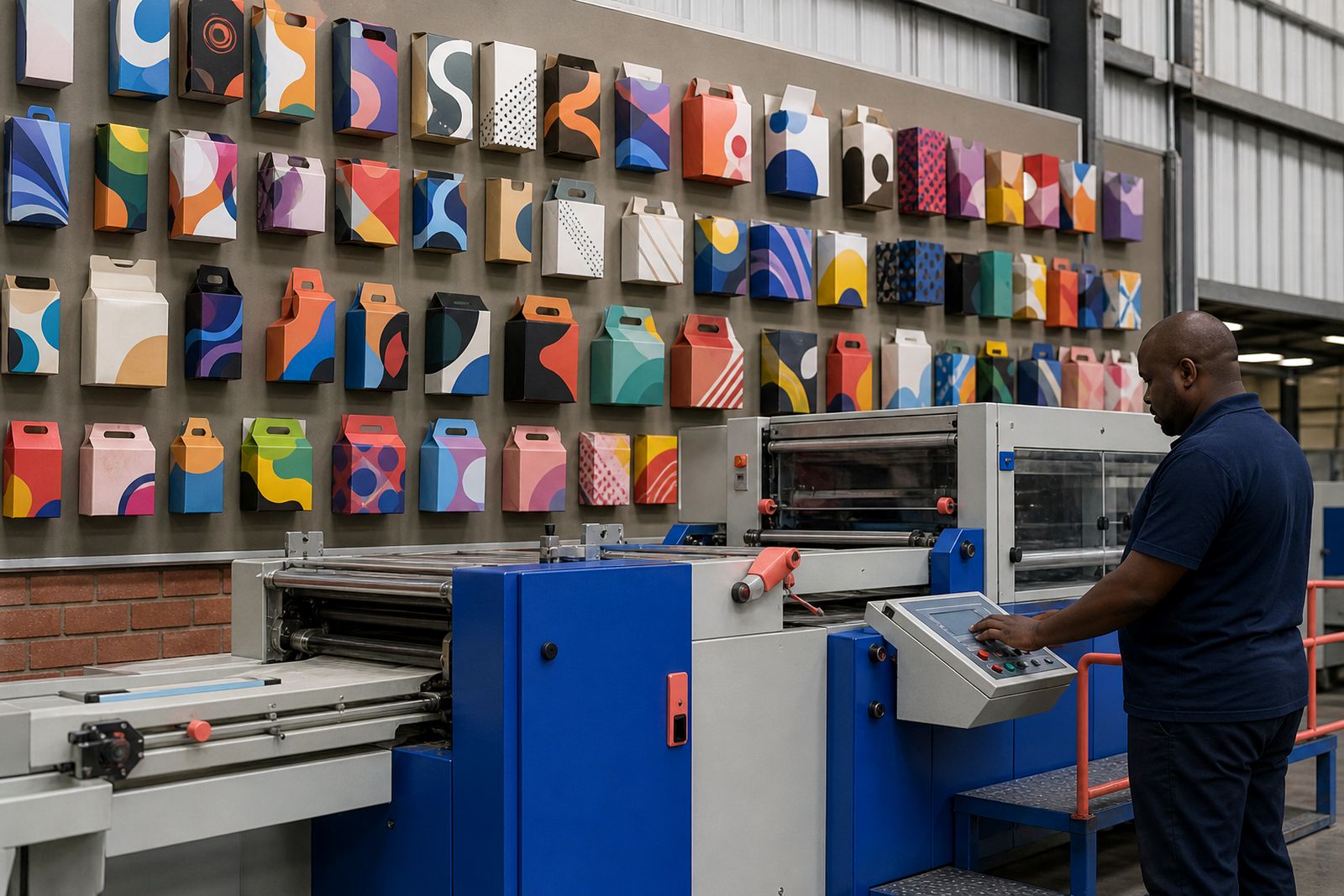
Packaging work changes with the product inside
A takeaway meal sleeve, a skincare carton and an appliance accessory box may all look like folded board on the outside, but they are not specified in the same way. The product weight, packing line, storage conditions, retail setting and transport route all affect how the carton should be printed and finished.
From our Pinetown base we print litho-laminated cartons, folding cartons, shelf ready boxes and display packs for businesses across KwaZulu-Natal and for delivery into every province. We handle artwork checks, proofs, printing, laminating, die cutting and gluing, so each job is checked against the way it will actually be filled, stacked and shipped.
Food, cosmetics and electronics each ask for something different
Some sectors need clean high-volume repeat work, while others need a carton that carries colour detail and a more premium finish. In humid coastal conditions board performance matters just as much as print appearance, especially when cartons move from storage to transport and then into retail shelving.
- Food and beverage packs often need strong colour consistency, legible date coding areas and structures that hold up during handling in fast packing environments.
- Cosmetics and personal care cartons usually call for finer graphics, smoother surfaces and finish options that help small packs stand out on crowded shelves.
- Electronics and appliance cartons often place more emphasis on scuff resistance, product identification panels, barcode readability and neat fit around inserts or inner components.
- Promotional and shelf display packs need structure and print to work together so the pack opens cleanly and presents stock properly in store.
A practical way to choose the right carton route
If you are comparing options across this section, start with the product and the retail environment rather than the artwork alone. A smart looking print file cannot fix the wrong board grade or a structure that folds badly on the packing line. We usually look at how the pack will be filled, where it will sit in store and what kind of handling it will face before recommending a print route.
- Choose folding cartons when the product is lighter, the pack is compact and the job needs crisp print on board with efficient creasing and gluing.
- Choose litho-laminated boxes where a stronger corrugated construction is needed together with higher print impact on the outer face.
- Choose shelf ready or display formats when outer transit packaging must also present the product directly on shelf.
- Choose added finishes such as foil, embossing, spot UV or varnish only when they support the pack brief and the retail position, not just because they look decorative.
What matters most in regulated or detail-heavy sectors
Many carton jobs carry more than branding. They also need ingredients panels, usage directions, warnings, barcodes, batch areas and retailer-specific layout rules. In these sectors the artwork stage needs careful checking so that small text, reverses, tints and linework hold properly once printed and converted.
This is particularly important where one product range has several variants. Shade differences, flavour changes, fragrance names or technical specifications can create avoidable picking errors if the outer packs are not clearly separated in print. Good carton planning reduces that risk and helps the finished packs stay clear in the warehouse and on shelf.
Shelf impact has to survive handling
A carton may look sharp on a proof but still disappoint after transport if the substrate, laminate and finish have not been chosen well. For packs moving through distribution centres and retail back rooms, corners rub, faces scuff and stacked loads shift. That is why we match print and finishing decisions to the way cartons will travel and where they will be displayed.
For premium retail lines, extra visual detail can make sense. For faster-moving packed goods, consistency and clean conversion may matter more than special effects. The job is to balance appearance with practical use, not chase an effect that slows packing or marks too easily.
Using this section
Each industry page in this section looks at a different packaging environment, with notes on print finish, structure and the common issues that affect carton performance. If your product sits between categories, the overlap is normal. A nutrition product may need the shelf presence of cosmetics packaging but the information density of food labelling, for example.
If you are weighing up options across several product lines, send the carton size, packed product details, board preference if known and artwork status through our contact form. That gives our team enough to assess the likely print and conversion route before production moves ahead.
Explore the range
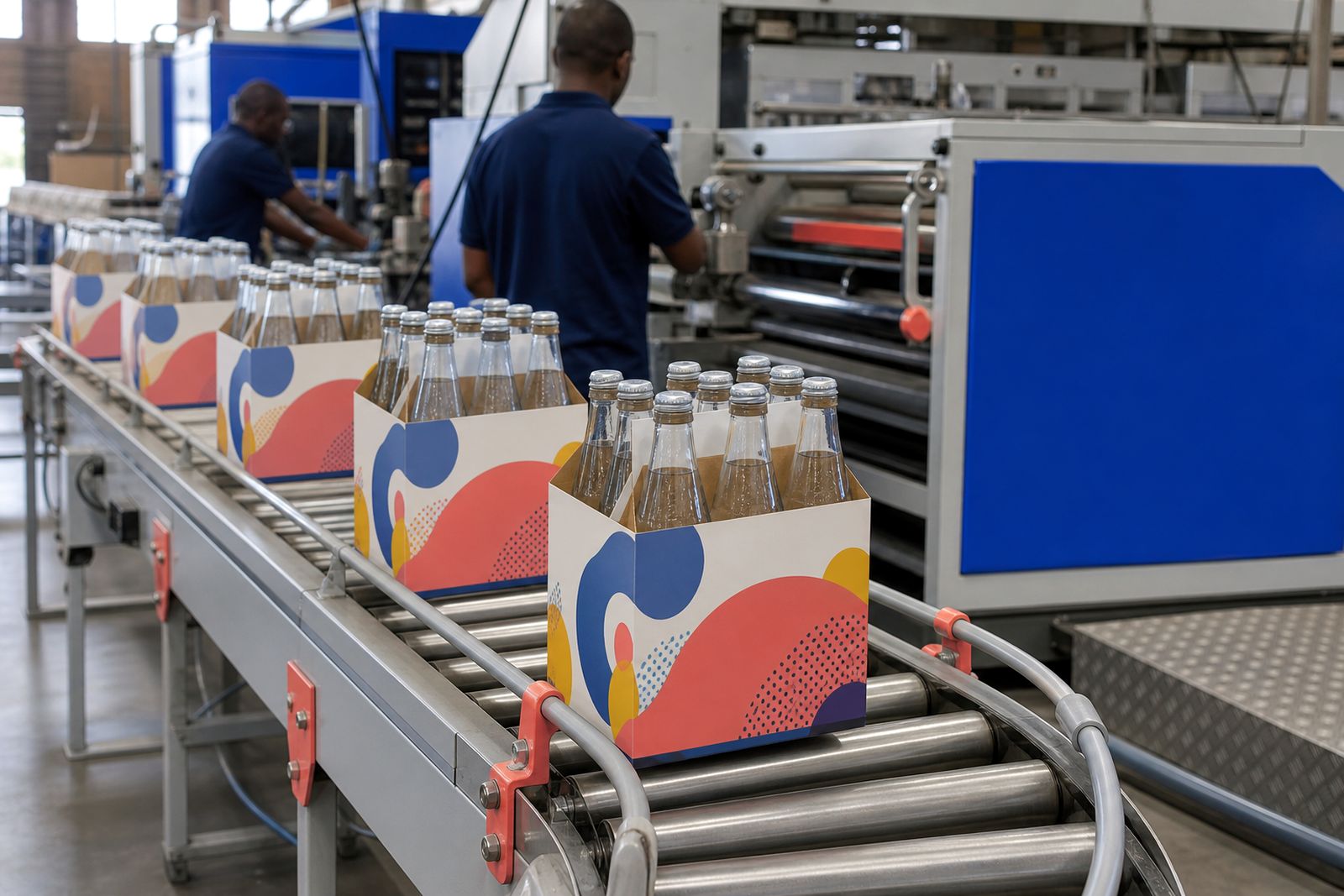
Cartons for food and beverage brands
Food packaging cartons need the right board, finish and structure for moisture, stacking and shelf handling.
Read more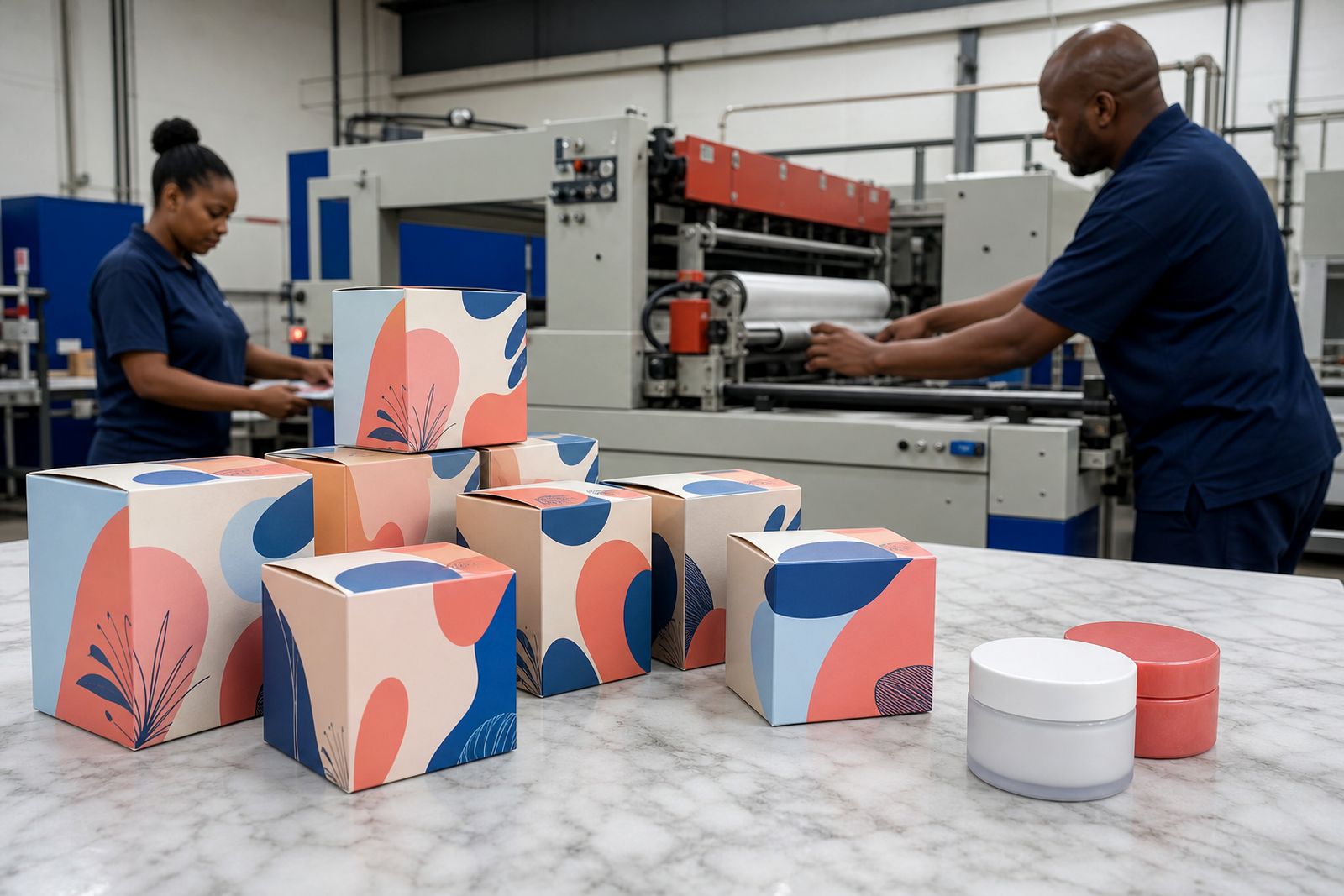
Cosmetics and personal care cartons
Cartons for beauty and personal care need sharp detail, stable colour and finishes that suit retail handling.
Read more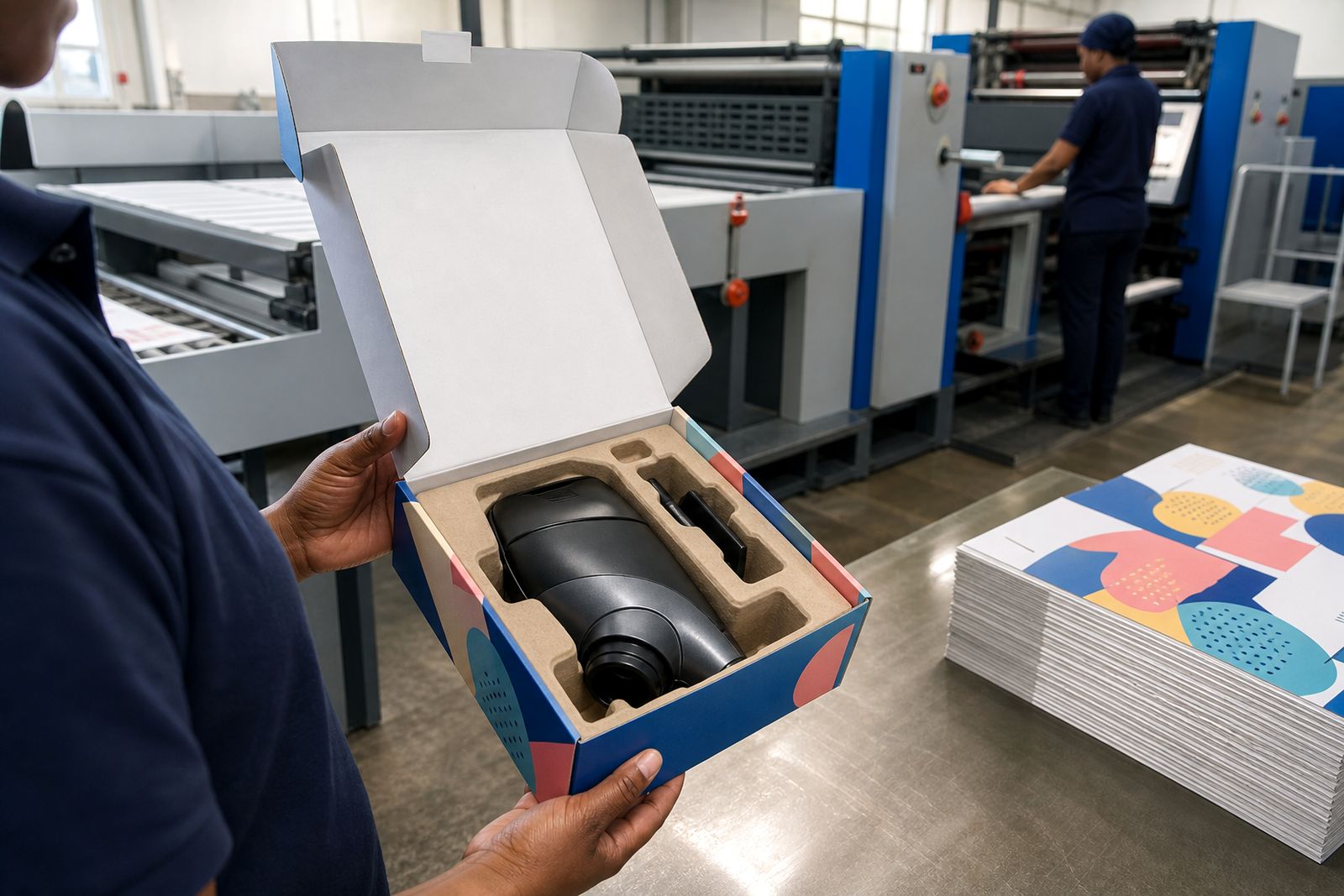
Boxes for electronics and appliances
Printed cartons and inserts for electronics packs that need tidy presentation and dependable protection in transit.
Read moreWhat our Packaging customers say
Verified Google reviews
Questions we get asked
Do you only print cartons for the industries listed here?
No. These are the main sectors covered in this section, but we also print cartons and boxes for other packed goods where board selection, print quality and conversion accuracy matter.
Can one packaging style work across different product categories?
Sometimes yes, but it depends on pack weight, retail handling, storage conditions and the amount of information that must appear on the carton. Similar sizes do not always mean the same board or finish is suitable.
Do you help check artwork before printing?
Yes. We review supplied artwork for practical print concerns such as size, panel fit, readable detail and how the file will convert once the carton is die cut and glued.
Tell us about the job
Send sizes, materials and where you are through our contact form, and we will come back with the practical options.
Open the contact form