

Boxes for electronics and appliances
Electronics packaging has to do more than look neat on a shelf. It must hold shape, protect packed parts and still present the product properly from Pinetown to stores and warehouses across South Africa.
Packaging that carries weight without looking overbuilt
Boxes for electronics and small appliances sit in a tricky space. The pack often needs to carry a heavier item than a cosmetic carton, but it still has to print cleanly and close neatly. That usually means balancing board strength, flute choice and insert layout rather than just moving to the thickest option on the list.
For kettles, hair tools, routers, adapters, speakers and similar retail packs, the outer carton has to resist panel crush during stacking while still giving a good printing surface. A litho-laminated structure works well where shelf appearance matters and the pack will move through distribution before landing in a retail aisle or on an e-commerce shelf. The printed sheet gives sharp graphics, and the corrugated backing adds stiffness where a plain folding carton may feel too light.
- Outer walls must stay square under stacking pressure.
- Print needs to remain clean around folds, glue seams and carry panels.
- Open-and-close points should not tear after routine handling.
- The packed item must not shift enough to damage corners or accessories.
Choosing inserts for plugs, cords and loose accessories
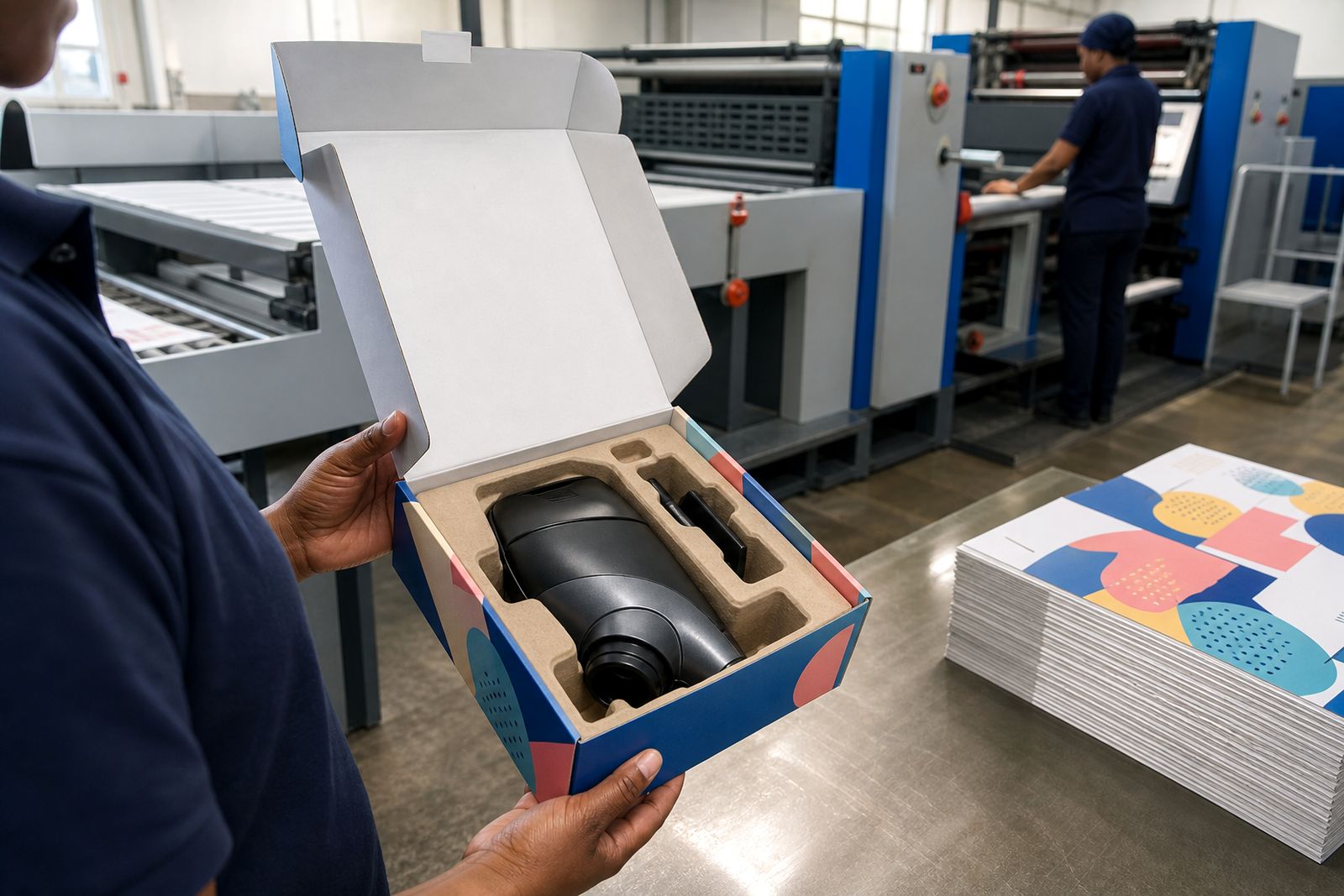
In electronics packaging, the insert often does the real protective work. A box can look excellent on the outside and still fail if the charger, cable, manual and main unit knock against each other during transport. Inserts need to lock parts into place and make packing straightforward for the production team at the filling end.
We usually look at the product as a set of components rather than one shape. A handheld appliance might include the unit, plug top, cable, attachments and folded leaflet. Each of those parts needs a place, otherwise the carton bulges or rattles. With the right insert style, the packed set feels settled when handled and opens in a way that makes sense to the customer.
- Partitioned inserts help separate hard accessories from the main item.
- Folded board fittings suit lighter components where a plastic tray is not wanted.
- Corrugated inserts add support under heavier products and around corners.
- Retention tabs can hold cables and manuals without adding clutter.
Where appliances are packed for national distribution, a tidy insert layout also helps warehouse staff spot missing parts before cartons are sealed. That sounds minor, but it avoids a lot of trouble later on.
Print finishes that suit the category
Electronics cartons tend to need a cleaner finish than many fast-moving grocery packs. Fine text, barcodes, serial label space and product imagery all need stable reproduction. The finish should improve legibility and handling, not fight with either.
Gloss varnish can sharpen colour on product photography, while a more restrained finish may suit technical goods where the panel carries a lot of specification copy. Spot effects can help on a logo or key product image, but overdoing it on an appliance box often makes the pack feel busy. In this category, accuracy matters more than decoration.
Foil or embossing can have a place on premium device packaging, especially for giftable or higher-ticket items, but the carton still has to run properly through packing and transport. If a finish interferes with barcode reading, glue performance or panel scuff resistance, it is the wrong finish no matter how good it looked on a proof.
A workshop example from KwaZulu-Natal
One recent workshop run involved a boxed countertop electrical item with several attachments and a folded instruction booklet. The original sample sent in by the brand owner looked presentable from the front, but once packed, the side panels bowed outward and the inner parts shifted enough to mark the main unit. The issue was not the print. It was the internal fit and the board combination.
The revised pack used a litho-laminated outer with a stronger corrugated base structure and a reworked insert that separated the plug, cord and accessory pieces. Panel dimensions were tightened slightly so the carton closed square, and the carrying points were adjusted to reduce stress on the top area. After that, the packed box stacked better in the branch storeroom and looked straighter on dispatch pallets, which made a visible difference straight away.
That kind of adjustment is common with appliance cartons. A pack can be close to correct on paper and still need practical changes once the real product is dropped into it. Durban humidity and long road freight upcountry also expose weak points quickly, so board and glue choices should never be guessed.
Information that helps before print starts
Good electronics packaging starts with complete pack information. If dimensions are based on an early sample and not the final assembled product, the risk moves right through the job. The same applies to accessory counts, barcode placement and any legal copy that must sit on the carton. It is much easier to resolve these points during artwork checks and proofs than after die cutting has begun.
- Final packed product dimensions, including cables and attachments.
- Approximate product weight and whether cartons will be pallet stacked.
- Any orientation requirements for retail display or courier packing.
- Barcode positions, warning text and serial or label areas.
- Whether the product is for shelf display, online fulfilment, or both.
Where the carton will move between coastal and inland conditions, it also helps to note storage conditions at the filling site and in distribution. A pack that holds up well in a dry storeroom may behave differently near the coast, so those details are useful from the start.
Where litho-laminated cartons make the most sense
Not every electronics pack needs the same construction. Smaller, lighter items may suit folding cartons, while bulkier products often benefit from litho-laminated boxes that combine a strong outer with good print quality. The right answer depends on product mass, store handling, insert needs and how the carton will be shipped across the country.
For South African brand owners and manufacturers, the practical aim is straightforward: print a carton that protects the packed item, closes cleanly on the line and still presents the product properly in store. That is the standard we work to in Pinetown when handling cartons for electronics and appliances. If you need input on board, flute or insert structure for a current pack, send the details through our contact form and we can review the job around the actual product and packing method.
What our Packaging customers say
Verified Google reviews
Questions we get asked
Can you print boxes for appliances with multiple loose parts?
Yes. We print cartons for products packed with cables, plugs, attachments, leaflets and other accessories, and we can help assess insert layouts so the contents sit more securely inside the box.
Do you only handle printed outers, or can inserts be included too?
We handle printed cartons and can produce structures that work with inserts for electronics and appliance packs. The final layout depends on the product shape, packed weight and how the unit will be distributed.
Do you design product brands or make plastic packaging?
No. We focus on printed cartons and boxes, including litho-laminated cartons, shelf ready boxes, folding cartons and display boxes. We do not design brands, and we do not make plastic packaging.
Also worth a look
Tell us about the job
Send sizes, materials and where you are through our contact form, and we will come back with the practical options.
Open the contact form