

How a carton job works
A carton job moves through a set production path so colour, fit and board strength stay under control from the first file review to final delivery. We handle the printing, lamination and finishing stages in Pinetown for cartons going to plants, packers and warehouses across South Africa.
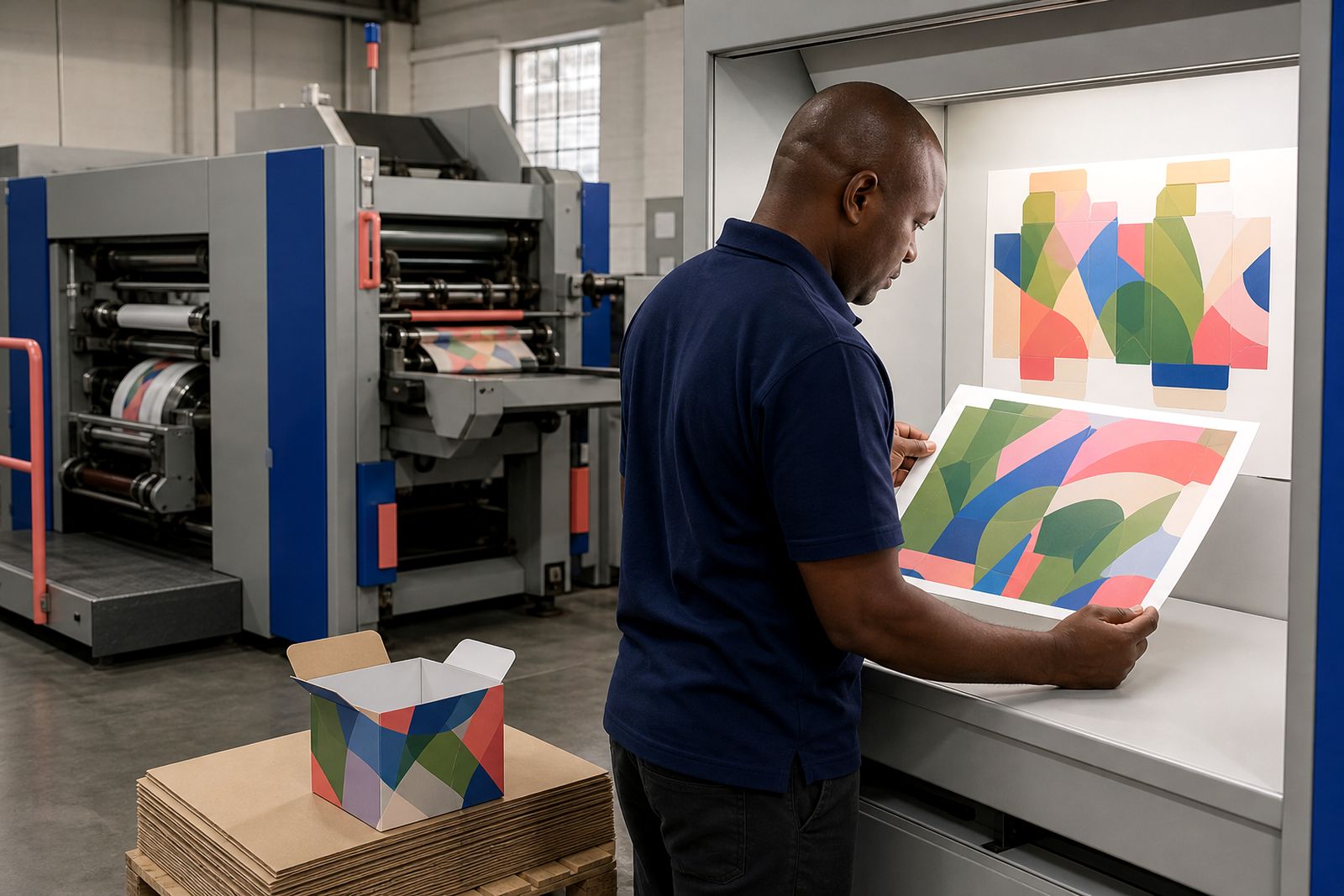
Where the job starts
Most work begins with your brief, artwork files and carton structure. We check the dieline, panel layout, bleed, barcode position, colour build and any special finish before the job is booked into production. If the carton is going onto a corrugated base, we also look at flute direction, crush risk and how the printed sheet must sit after lamination.
At this stage we are checking production practicality, not creating a new brand identity. We print cartons and boxes, and we can work from your existing artwork and approved packaging structure. Plastic packaging is outside our scope.
- Product type, packed weight and packing method
- Outer dimensions in millimetres
- Board or corrugated preference if already specified
- Print colours, finishes and regulatory copy
- Delivery point, split quantities and packing notes
Files, proofs and approval points
Before full production, we prepare the job for proofing so the print area, cut lines and folds can be checked properly. This is where brand owners and production teams confirm copy, legal text, ingredient panels, batch marking space and shelf presentation. A proof helps catch the small issues that cost time later, like copy crossing a crease or a barcode sitting too near a glue flap.
Depending on the job, we may issue a visual proof, a layout check or a physical sample for structure review. Final approval is needed before the press run proceeds. If your carton will carry foil blocking, embossing, spot coating or a gloss or matt varnish, those elements should be marked clearly in the supplied file set.
- Print-ready artwork with fonts outlined or supplied
- Dieline file matched to the final carton size
- Linked images at suitable resolution for print
- Brand colour references and finish notes
- Approval on text, language panels and barcode content
Print and lamination on the production floor
Once approved, the printed sheets are produced to suit the chosen carton format. Folding cartons usually run on carton board, while shelf ready boxes and many display units use a litho-laminated construction where the printed top sheet is mounted onto corrugated board. This gives stronger wall strength and better shelf presence for transit and retail handling.
Colour consistency matters here because cartons often sit side by side on a shelf under bright store lighting. We watch registration, ink balance and sheet condition through the run, then move into lamination where the print face and base material are bonded as a single unit. In coastal conditions around Durban humidity can affect sheet movement, so handling and storage between stages are important for clean converting later on.
Common substrates include folding box board, white lined board and corrugated combinations selected for compression needs, print finish and pack line use. Flute choice, grain direction and glue area all play a part in how the carton performs once it is filled.
Die cutting, creasing and gluing
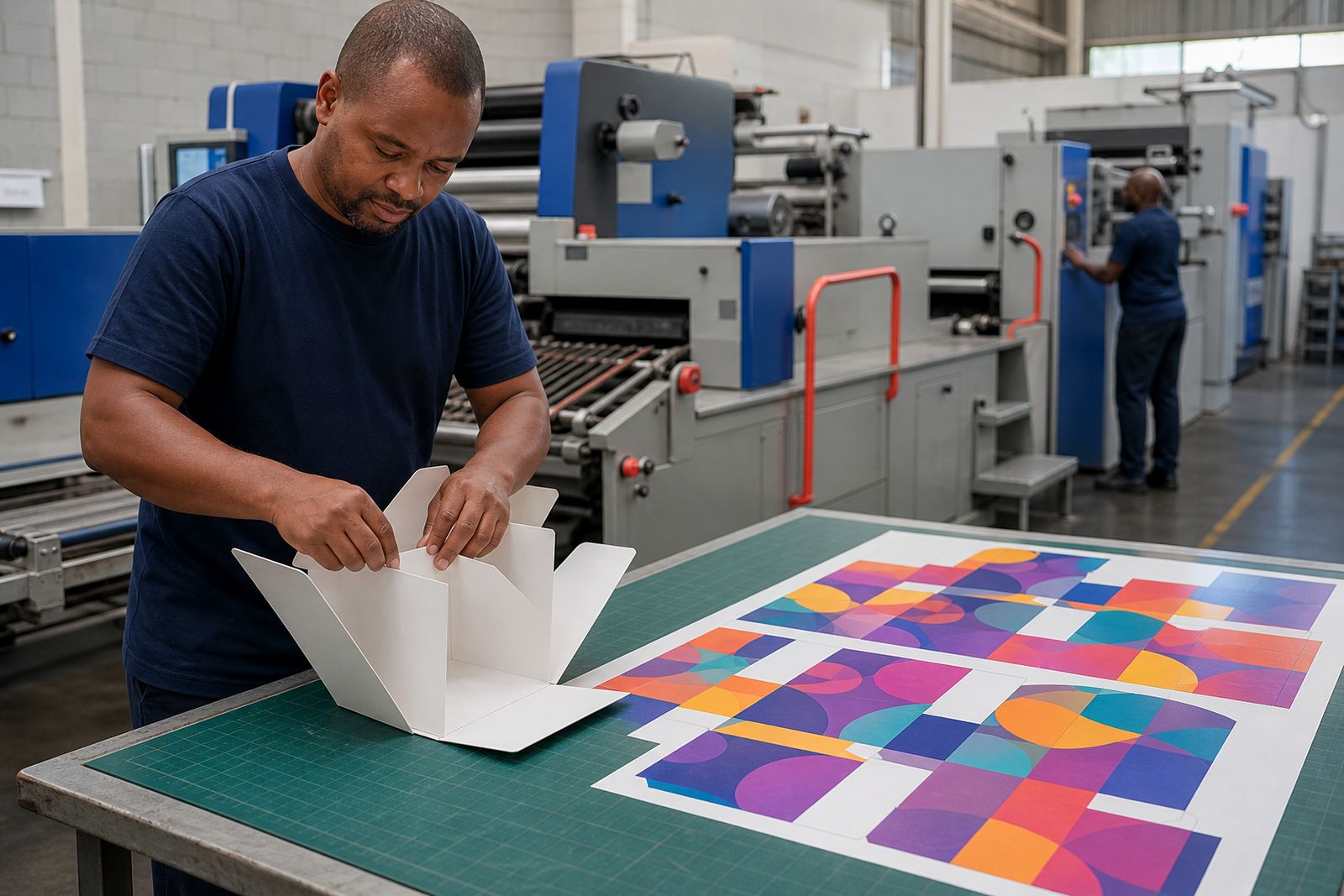
After printing or lamination, sheets move to die cutting. This stage forms the carton shape, creases, locking points, windows and cut-outs required for assembly. Accurate creasing is especially important on folding cartons because poor fold memory can slow down hand packing or create trouble on automatic filling lines.
Gluing follows once the blank has been cut and stripped. Side seams, crash lock bases, tuck ends and display styles each need the correct folding sequence and adhesive application. We also check that the finished carton opens cleanly, holds shape and stacks properly in bundle form. A smart print job can still fail in use if the fold pattern is wrong, so converting accuracy matters as much as the print itself.
- Standard straight-line and lock style carton forms
- Shelf ready formats with tear-away fronts where required
- Display box components prepared for retail assembly
- Neat bundle packing for easier receiving and counting
How costing is worked out
Carton pricing is built from the structure and the amount of work the job needs at each stage. Size affects sheet yield. Board grade and flute affect material cost. The number of print colours, the use of special finishes, proof requirements, die complexity, gluing style, packing method and delivery destination all influence the total.
Longer runs usually spread fixed setup costs across more units, while short runs can carry a higher proportion of origination and make-ready. A simple folding carton with one varnish pattern costs differently from a shelf ready box with laminated corrugated backing, tear features and multiple finishing passes. If a new die is needed, that is priced as a separate production tool linked to the approved structure.
To price the job properly we need the final dimensions, artwork status, substrate direction and delivery plan. If stock is delivered to more than one province, that should be flagged early so packing and dispatch can be arranged sensibly.
Dispatch, storage and support after delivery
Finished cartons are packed for transport according to the format and the condition they need to reach your site in. Flat packed folding cartons, shelf ready units and display components are bundled and labelled for receiving at the warehouse or packing plant. We deliver cartons from KwaZulu-Natal to every province.
After delivery, cartons should be kept dry, level and away from excessive heat or damp air. Good storage helps them hold shape and print finish until they are filled. If you are planning a repeat run, keep a record of the approved artwork version, board specification and any filling-line notes from the last job. That makes the next production cycle cleaner and avoids version drift.
When you are ready to discuss a job, send the brief through our contact form with the dieline, dimensions and intended use. That gives us a proper production starting point, even if the structure still needs a few adjustments.
What our Packaging customers say
Verified Google reviews
Questions we get asked
Can you help if our artwork is ready but the carton structure still needs checking?
Yes. We can review the supplied dieline and flag production issues such as weak folds, poor glue areas, panel clashes or finish placement before the job goes to print.
Do you print both folding cartons and litho-laminated boxes?
We do. Folding cartons are suited to many retail packs, while litho-laminated formats are often used where extra stiffness, display strength or corrugated backing is needed.
What should we send for an accurate quotation?
Send the carton dimensions, dieline if available, artwork status, board or flute preference, required finish, estimated quantity split and delivery destination through our contact form.
Tell us about the job
Send sizes, materials and where you are through our contact form, and we will come back with the practical options.
Open the contact form