
Cartons and boxes
Our carton range covers retail packs, transit outers and shelf ready formats for brands that need print accuracy and dependable conversion. This page helps you compare litho-laminated boxes, folding cartons and display boxes before moving into artwork, board and finishing choices.
The carton range in one place
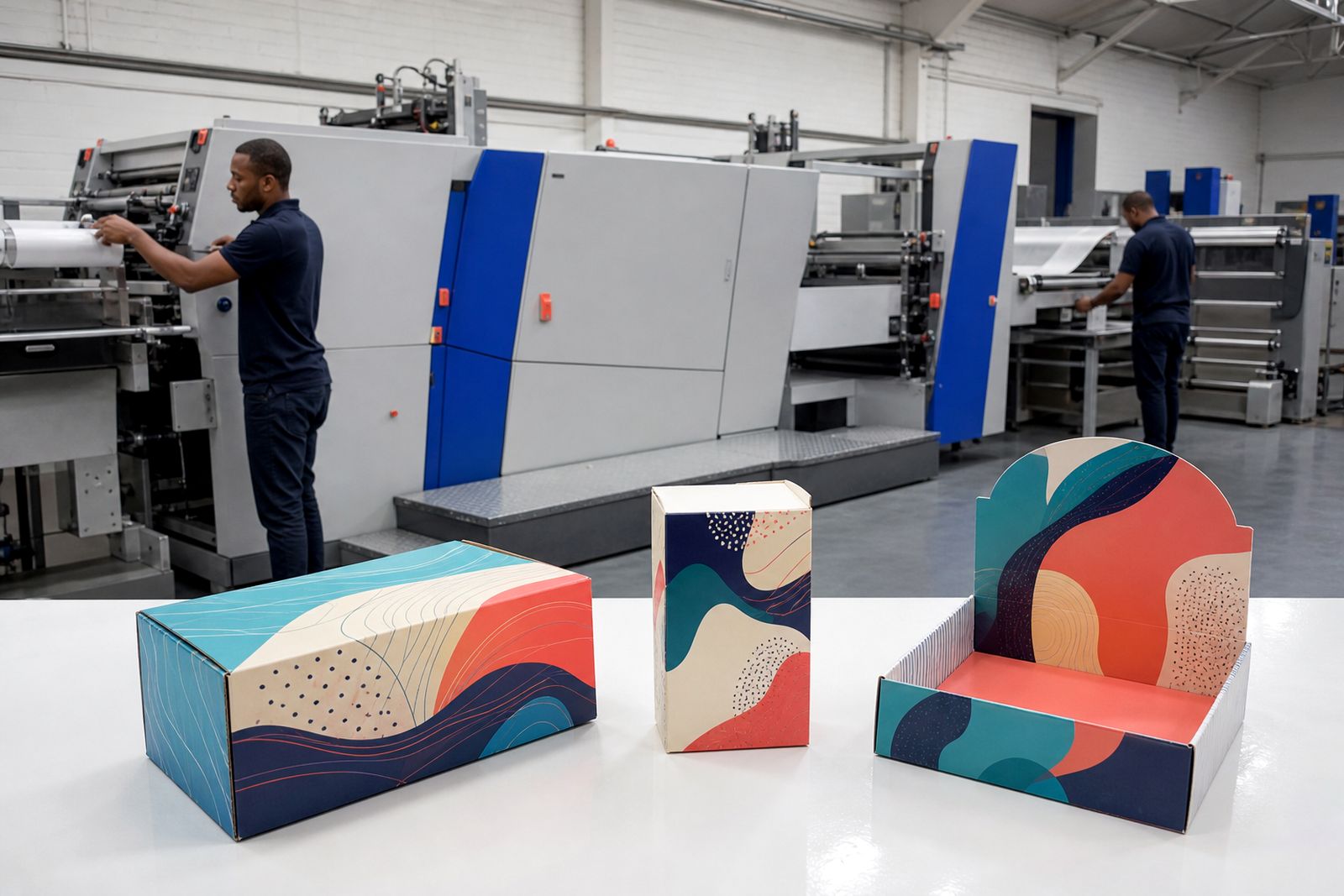
Some jobs need a neat folding carton that carries fine print and a polished finish. Others need a corrugated box with a printed outer sheet laminated onto it for extra strength in handling, stacking and delivery through depots around KwaZulu-Natal and further inland.
At our Pinetown operation we print and convert cartons for food and beverage lines, cosmetics, personal care, electronics and other packed goods where presentation and pack performance matter together. The section pages cover each format in more detail, while this page gives you the working difference between them so the brief starts on the right footing.
Where litho-laminated boxes fit best
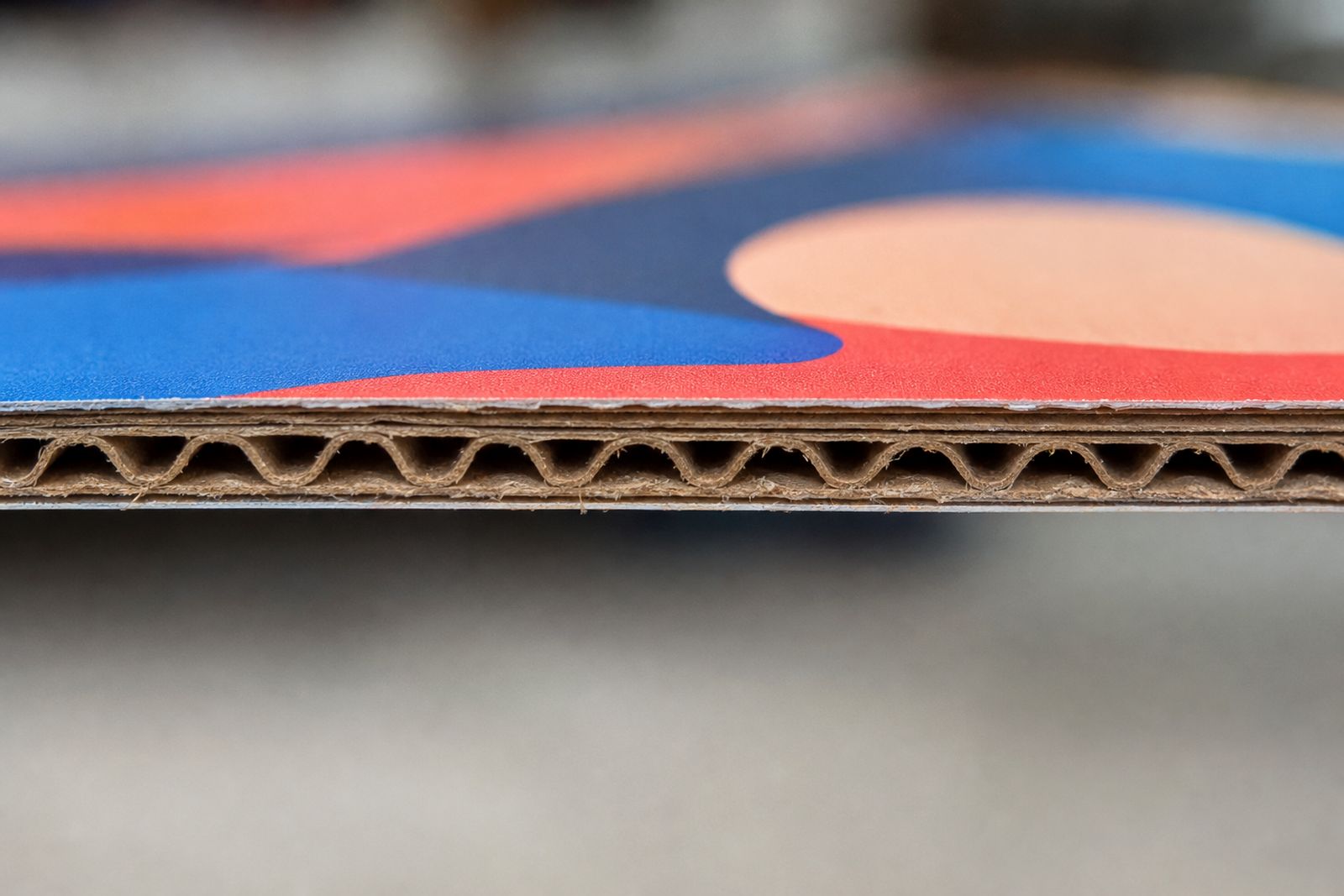
Litho-laminated boxes combine high quality sheet-fed print with corrugated board strength. The printed sheet is mounted to the flute profile chosen for the product, which makes this format useful where the pack must travel well and still look clean on arrival at retail or at a distributor.
- Good for heavier contents or products that need more crush resistance.
- Useful when outer panels carry photos, colour blocks or detailed text.
- Suitable for shelf ready outers and branded transit packs.
- Common where coastal humidity and warehouse handling can punish weaker packs.
This format is often chosen for beverage multipacks, appliance accessories and larger personal care packs. If your product already lives in a corrugated case but the print result needs to look sharper, litho-lamination is usually the first route to examine.
When a folding carton is the better route
Folding cartons are usually the right choice for lighter retail packs where shape, finish and efficient filling matter more than corrugated strength. They suit products that sit on shelf face-on, hang from a peg or pack neatly into secondary outers for dispatch.
- Best for compact retail units with fine text and small panel details.
- Works well for cosmetic cartons, dry food packs and boxed components.
- Offers tidy creasing, accurate folds and clean glued seams.
- Takes decorative finishes well, including foil, embossing, spot effects and varnish.
If the product weight is modest and the shelf role is mainly brand presentation, folding board can be the cleaner solution. It also gives more freedom on tuck styles, windows and closure details, though the board grade still needs to suit packing lines and distribution conditions.
Display boxes and shelf ready formats on real retail floors
Display boxes and shelf ready packs do two jobs at once. They move stock through distribution and then convert into a merchandising unit that can be opened, placed and replenished with less handling at store level.
That matters in busy chains where staff need packs that tear open correctly and still leave the front panel looking presentable. Perforations, tear strips, tray depth and header height all affect whether the unit stands neatly or looks ragged after opening which is why the structural layout deserves proper attention before print is approved.
For promotions, new flavour launches and counter placement, display formats can carry the same print language as the primary carton while giving the retailer a ready made sales platform.
A practical way to choose between the three
The best format usually becomes clear when you look at product weight, filling method, transport conditions and where the pack will be seen first. A compact beauty item and a boxed electrical accessory do not face the same demands, even if both need sharp branding.
- Choose folding cartons when shelf appearance, compact size and refined finishing lead the brief.
- Choose litho-laminated boxes when the pack needs stronger walls for handling and stacking.
- Choose display or shelf ready boxes when the outer pack must also work as the retail tray.
- Review board and flute together if the product is fragile, dense or shipped across provinces.
- Flag any special finish early so proofs and production checks match the final pack intent.
Artwork complexity also matters. Very small type, reverse text and critical colour areas need the right substrate and print planning from the start, otherwise a pack can be structurally sound but visually disappointing.
From file check to delivery
Our scope covers artwork checks, proofs, printing, laminating where required, die cutting, gluing and delivery. We do not develop brand identities and we do not produce plastic packaging, so the conversation stays centred on printed cartons and boxes that can run properly in production.
If you already know the format, the next page in this section will take you deeper into that carton type. If the choice is still open, send the product details, packed dimensions, estimated weight and intended retail setting through our contact form and we can guide the discussion from a packaging point of view.
Explore the range
Litho-laminated boxes
Printed sheets laminated to corrugated board for boxes that carry weight well and still look clean on shelf.
Read more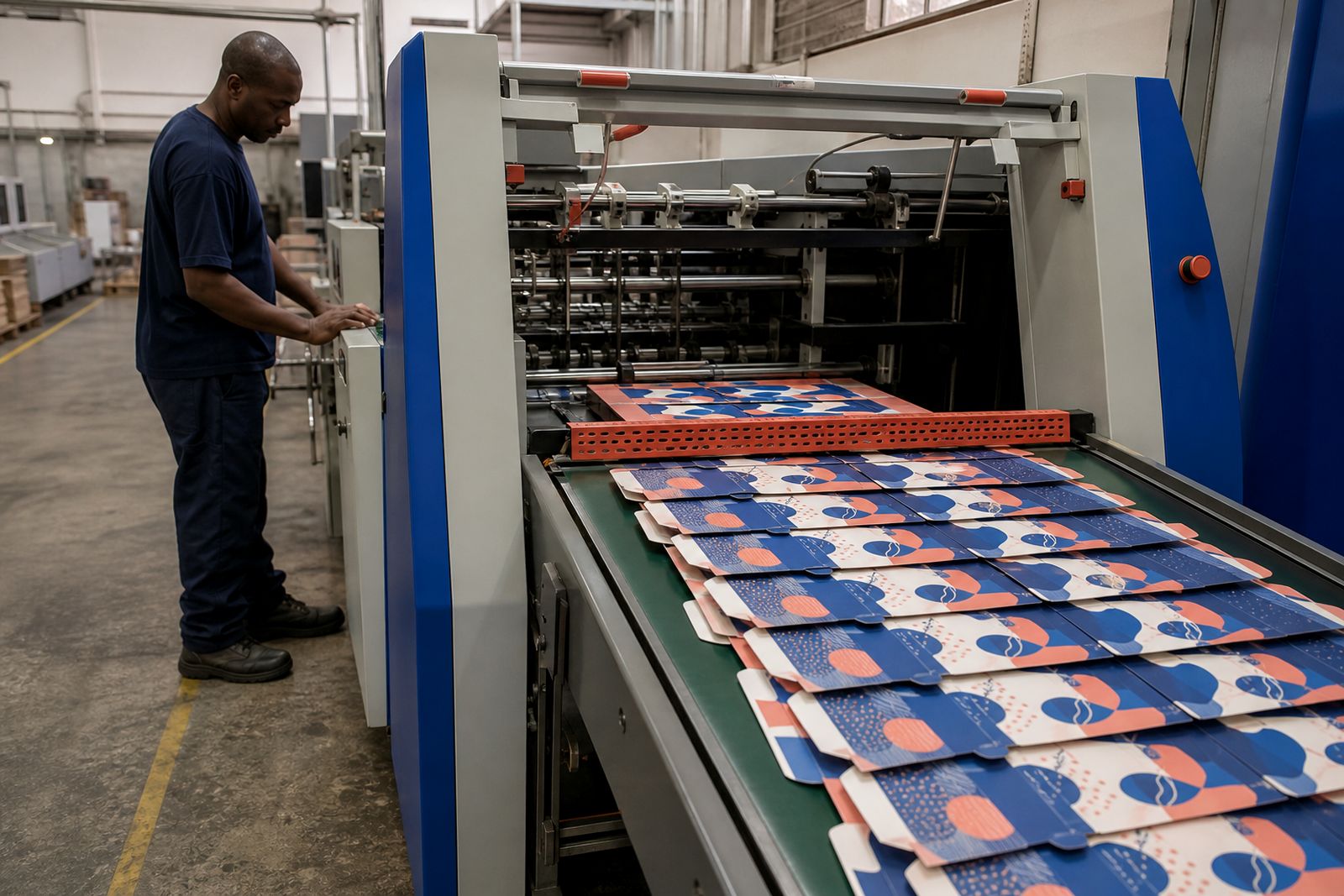
Folding cartons
Printed folding cartons for retail packs that need tidy creases, sharp graphics and reliable packing-line performance.
Read more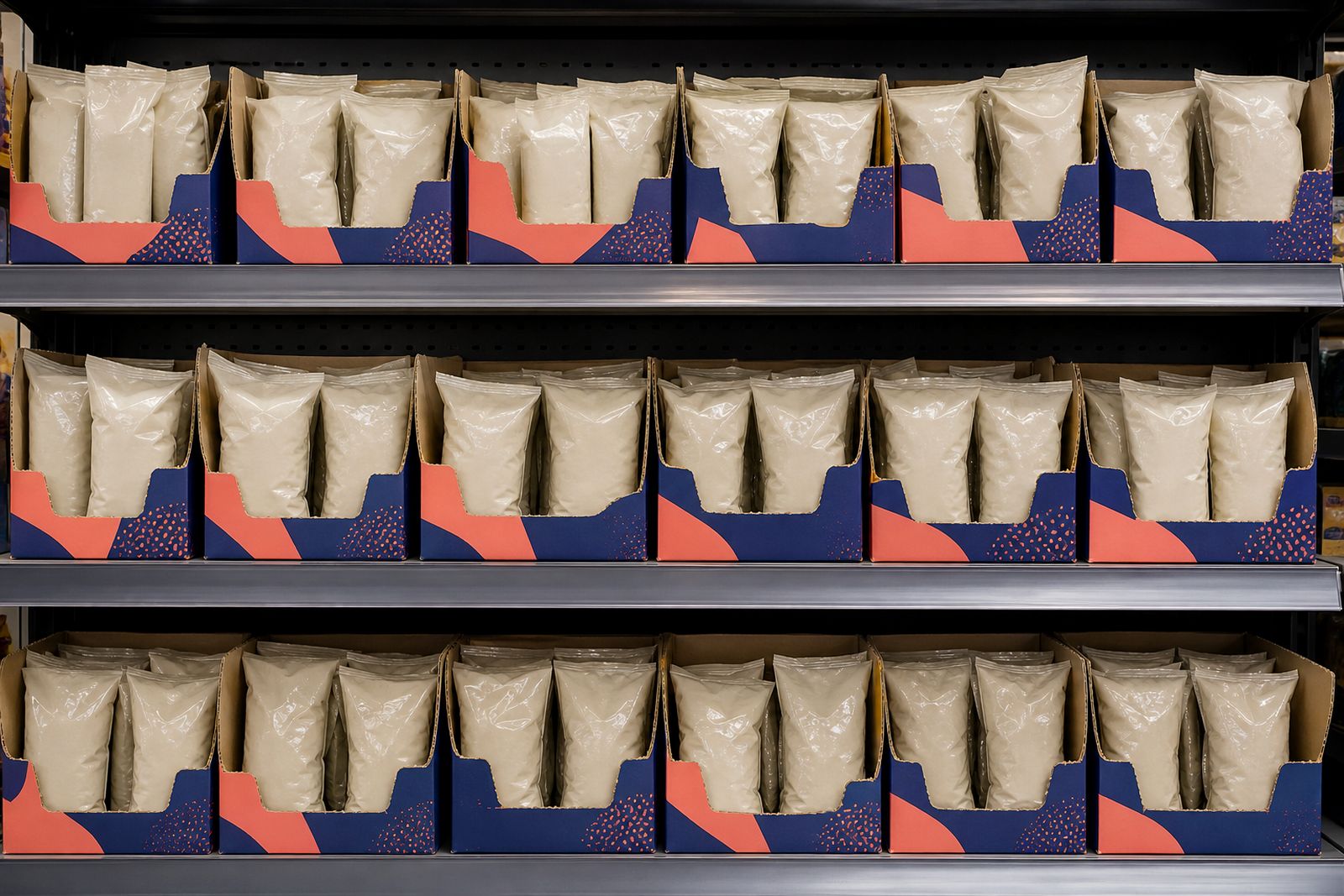
Shelf ready and display boxes
Retail-ready cartons with tear-off openings and display formats that pack well, travel well and present neatly on shelf.
Read moreWhat our Packaging customers say
Verified Google reviews
Questions we get asked
Can one product use both a folding carton and a litho-laminated box?
Yes. Many ranges use a folding carton as the primary retail pack and a litho-laminated outer for shelf ready presentation or stronger distribution handling.
Do you help with artwork checks before printing?
Yes. We check supplied artwork against the carton structure, print method and finishing requirements before the job moves into proofing and production.
How do I decide between board and flute options?
The choice depends on product weight, panel size, stacking pressure, moisture exposure and the finish required on the printed face. The board and flute page explains the trade-offs in more detail.
Tell us about the job
Send sizes, materials and where you are through our contact form, and we will come back with the practical options.
Open the contact form