

Print finishes
The finish on a carton changes how it looks in hand, how it catches light on shelf and how well the print stands up in packing and transport. We apply varnishes, lamination, foil and embossed detail to litho-laminated cartons, folding cartons and display boxes for packed goods moving across South Africa.
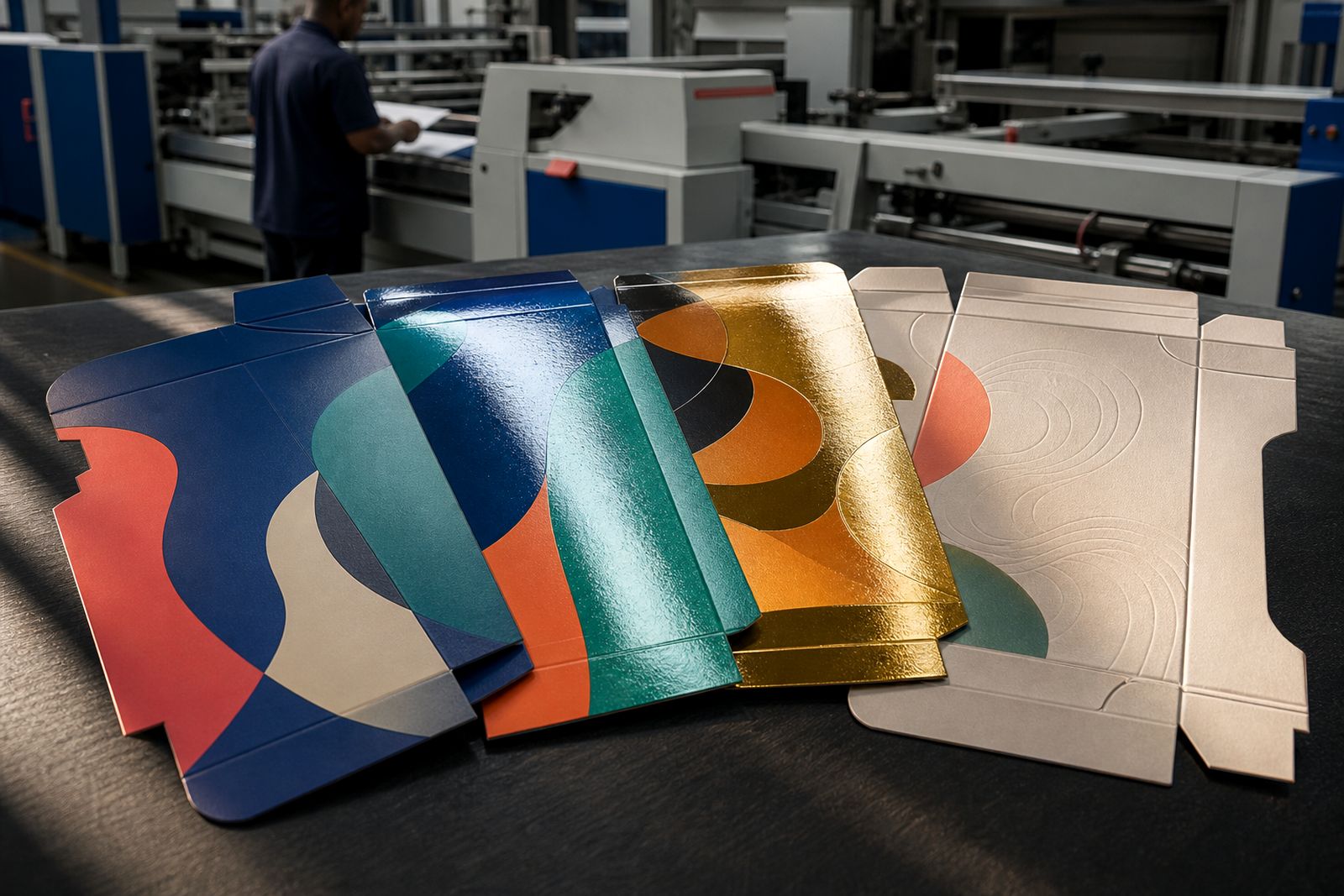
Finishes are chosen for the job the carton must do
A finish is not only decorative. On cartons it affects rub resistance, colour lift, scuffing on packed outers, moisture exposure during distribution and the way fine type or metallic detail reads under shop lighting. A food sleeve moving through a cold chain may need a different surface to a cosmetics carton on a pharmacy shelf, while an electronics pack often needs a neat, controlled look with strong panel definition.
We look at the board, the print coverage, the packing method and where the carton will sit before recommending a finish. In Pinetown and across KwaZulu-Natal, humidity and handling conditions can expose weak surface choices quite quickly so this step matters more than many buyers expect.
Where varnish makes sense
Varnish is often the most direct way to add protection and visual lift without changing the feel of the board too much. It suits many folding cartons and shelf packs where clean print, legibility and controlled cost matter. Different varnish effects can be applied across the full sheet or held to selected areas, depending on the artwork and the carton style.
- Gloss varnish gives stronger colour pop and a brighter shelf face.
- Matt varnish tones the sheet down for a softer, more restrained look.
- Spot effects draw attention to a logo, image panel or product name.
- Protective varnish helps where cartons will be stacked, packed tight or handled often.
Varnish is a practical route when the carton needs printed impact but still has to fold, glue and run cleanly through packing lines. On some jobs it is the better call than a heavier surface treatment, especialy where large volumes are moving through warehouses.
When lamination earns its place
Lamination adds a film layer to the printed sheet and is commonly selected where extra surface durability or a distinct tactile effect is needed. It is often used on litho-laminated boxes and selected carton lines that need to keep their face through transport from plant to depot to shelf. Gloss film tends to deepen colour and sharpen contrast, while matt film gives a flatter, premium surface that suits beauty, gifting and some tech packaging.
- Choose gloss lamination for brighter colour and a slick retail face.
- Choose matt lamination for a lower glare finish with a softer touch.
- Use lamination where cartons may rub during transit or shelf replenishment.
- Check fold lines and glue areas early, as the surface build affects finishing stages.
Lamination is not necessary on every carton. If the pack is short-life, lightly handled or cost-sensitive, a well chosen varnish may do the work just as well. We review that with the job before the print run starts.
Foil and embossing for selected detail
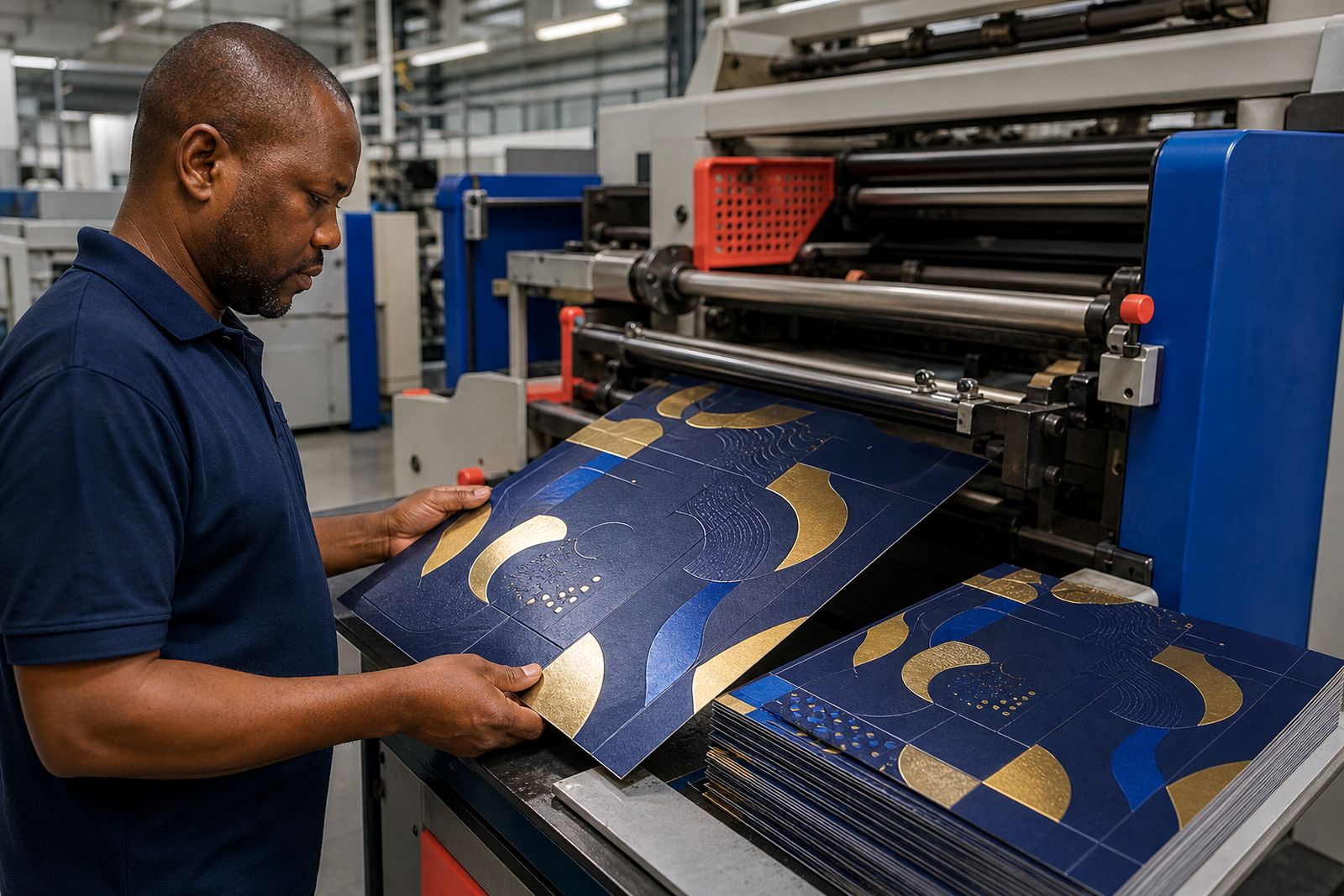
Foil blocking and embossing are used where the carton needs a more deliberate point of difference. Foil introduces a metallic or pigmented highlight, while embossing raises the surface to create shape and shadow. Used carefully, these effects strengthen brand marks, product names and feature panels without overloading the pack.
These options are common on cartons for cosmetics, premium beverages, gift lines and limited promotional packs, but they can also work well on electronics packaging where a single clean highlight gives the box a more finished retail look. Registration matters here, and so does the relationship between the board thickness and the graphic area chosen for the effect.
- Foil works best on focused elements rather than crowded artwork.
- Embossing needs enough area and board support to hold its shape properly.
- Combined effects can be striking, but they must suit the carton structure.
- Proofing helps confirm legibility before full production moves ahead.
A practical comparison before you decide
Most finish choices come down to four questions: what the carton must survive, how it should look under retail lighting, what the board can carry and where the budget should be spent. The points below are a useful starting guide.
- For strong colour lift with moderate protection, varnish is usually the first option.
- For better scuff resistance and a more distinct surface feel, lamination often suits.
- For a premium accent on a logo or title, foil is more targeted than an overall gloss.
- For tactile depth and shadow on selected artwork, embossing gives shape rather than shine.
- For cartons exposed to repeated handling, transport abrasion matters as much as shelf appearance.
- For small text and technical information panels, readability must stay ahead of decoration.
One finish does not suit every board and flute combination. A display box, a folding carton and a litho-laminated outer can carry the same artwork very differently once converted and packed.
How we match the finish to production
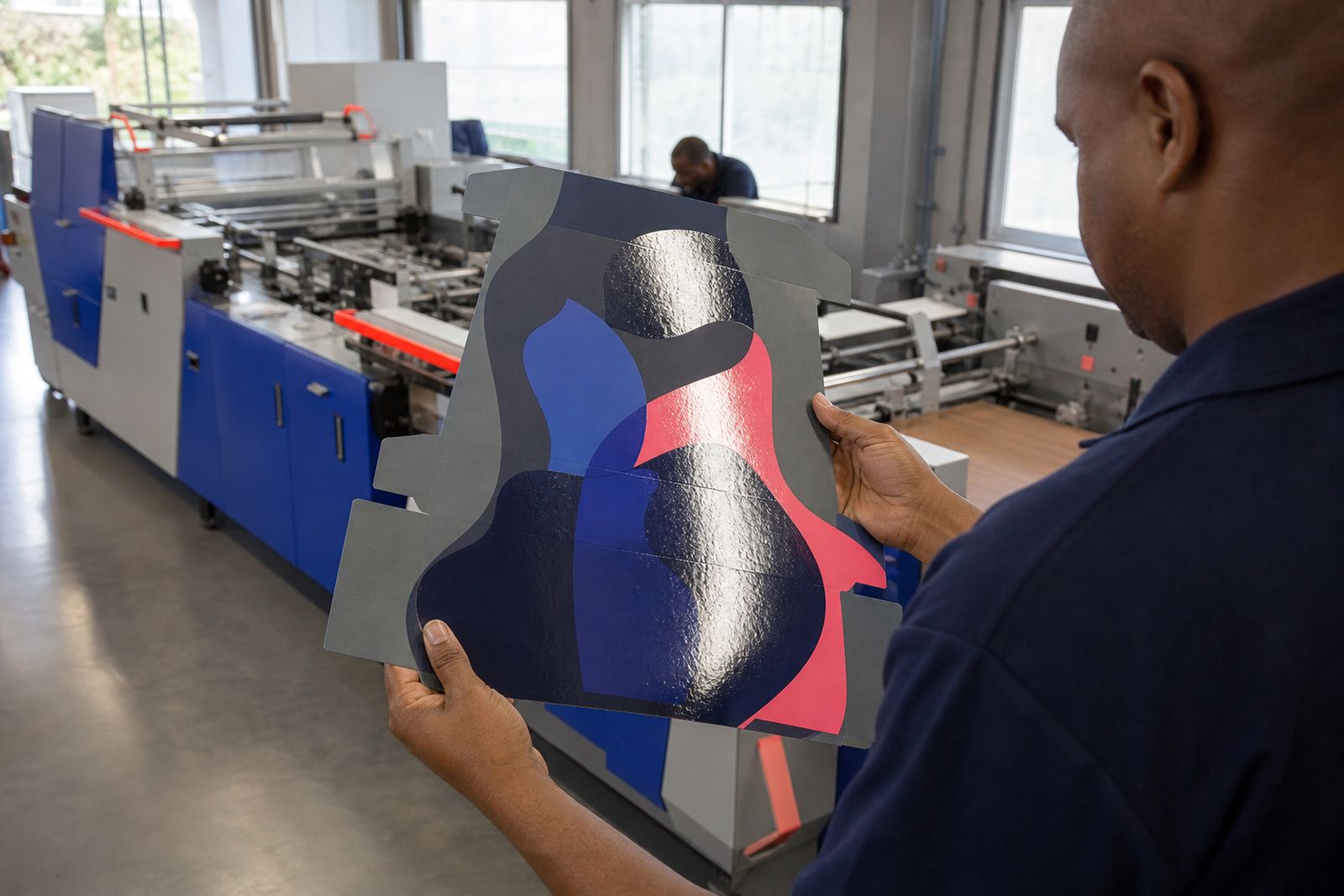
Finishes are considered alongside artwork checks, proofing, die cutting and gluing, not as an afterthought. That helps avoid avoidable issues such as cracking on folds, weak adhesion in glue zones or decorative effects placed where the carton structure will break them up. Our work covers the carton from print stage through laminating and conversion, so finish choices are reviewed in the full production context.
If you are comparing options for a carton range, send the pack size, board preference if known, product use and any reference samples through our contact form. We can then advise whether varnish, lamination, foil or embossing is the better fit for the printed result and the handling conditions.
What our Packaging customers say
Verified Google reviews
Questions we get asked
Can you combine more than one finish on the same carton?
Yes. Cartons can use more than one finish, such as a matt surface with selected gloss areas or foil on a raised detail. The combination must suit the board, artwork and conversion method.
Is lamination always better than varnish?
Not always. Lamination gives a different level of surface protection and feel, but many cartons perform well with varnish only. The better option depends on handling, retail use and the carton structure.
Do finishes affect proofs and artwork setup?
They can. Spot effects, foil areas and embossed details need clear file preparation and sensible placement. This is checked before production so the finish works with the carton rather than fighting it.
Tell us about the job
Send sizes, materials and where you are through our contact form, and we will come back with the practical options.
Open the contact form