
Cartons for food and beverage brands
Food and drink cartons have to carry print well while coping with cold rooms, delivery vehicles and busy retail shelves. This page looks at the board, finish and structure choices that matter when the pack has to stay clean, square and readable.
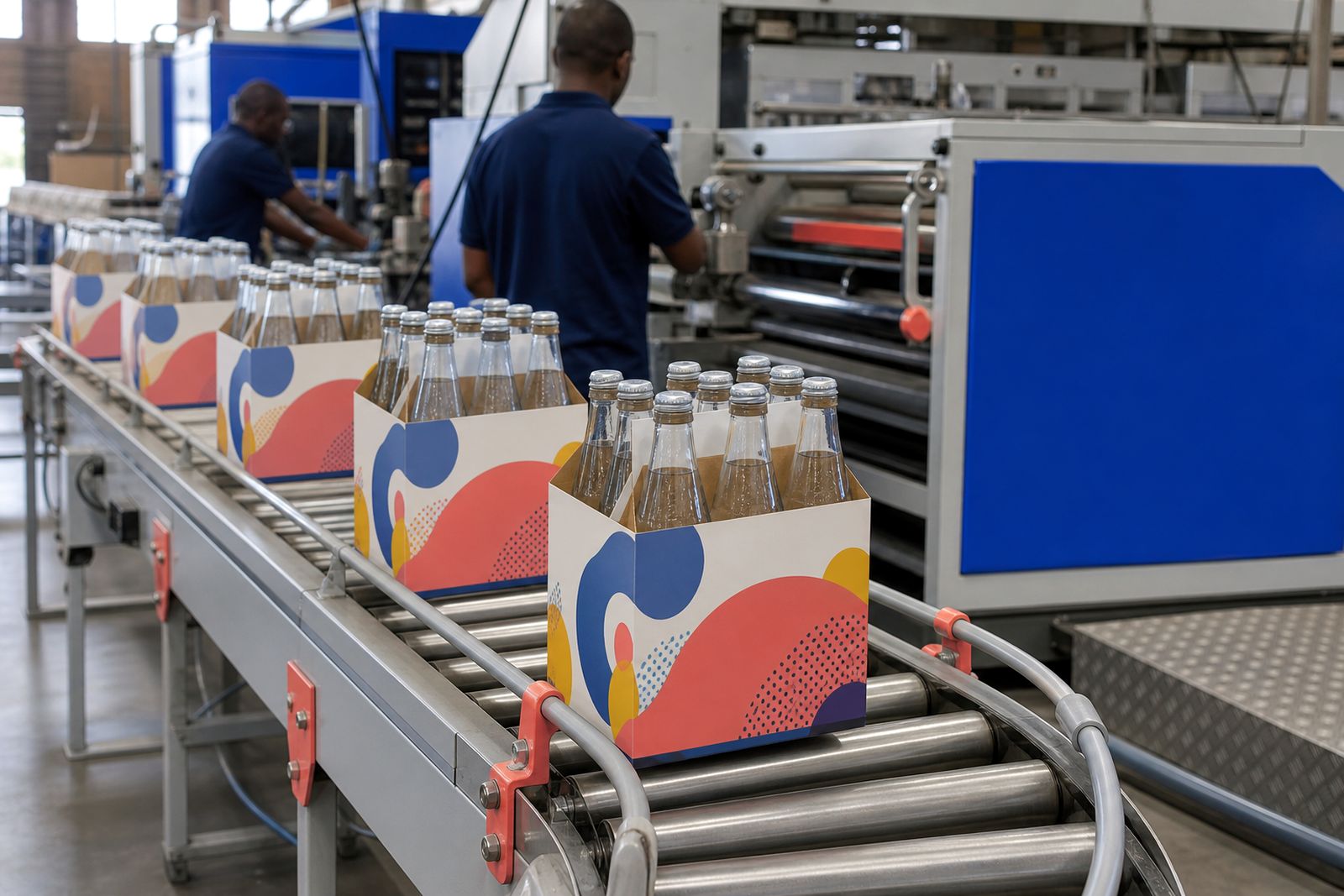
Food cartons work harder than they look
On shelf a carton may look simple, but food and beverage packaging takes strain from filling lines, pallet stacking, cold storage and transport across long routes. A pack that prints beautifully in the studio can still fail in trade if the board softens, corners crush or the glue line opens under load.
For that reason, carton planning for this sector starts with use conditions rather than artwork alone. Dry pantry goods, chilled products, powdered mixes, tea, snacks and beverage multipacks all place different demands on the structure. In KwaZulu-Natal, coastal humidity adds another layer, especially where stock moves between air conditioned stores, warm loading bays and refrigerated rooms.
- Outer appearance has to stay clean after handling.
- Panels must remain flat enough for barcodes and legal copy to read clearly.
- Board strength must suit stacking, shrink wrapping and vehicle transit.
- Finishes should protect print without making folds crack.
When these choices are settled early the job moves more smoothly through proofing, printing, laminating, die cutting and gluing, with fewer surprises at packing stage.
Board choice starts with product conditions
Food safe board selection is not one single answer. The right substrate depends on weight, pack format and where the carton will sit once filled. Folding cartons for dry goods often need crisp creases, neat glue seams and a print surface that holds colour consistently. Litho-laminated cartons and shelf ready boxes usually need more compression strength and better resistance to knocks in transit.
Where moisture is part of the journey, the board and flute combination matters a great deal. A carton moving from a chiller to ambient conditions can pick up surface damp and soften at edges if the specification is too light. Beverage related cartons may also face condensation from adjacent packed units, so the outer sheet and adhesive system have to be considered together, not as separate decisions.
- Folding carton board suits lighter retail packs with detailed graphics.
- Litho-laminated corrugated board helps where stacking strength is a bigger issue.
- Flute choice affects print smoothness, rigidity and shipper performance.
- Coatings and varnishes can improve rub resistance during handling.
We do not make plastic packaging, so when a brief needs a carton solution the discussion stays on board performance, print finish and pack construction. That keeps the specification grounded in the real job not in a generic wishlist.
Moisture, grease risk and handling on South African routes
Many food packs travel further than people expect. A run packed in Durban may move inland, sit in a regional warehouse, then head back to a coastal store with very different humidity conditions. On these routes, cartons need enough stiffness to keep shape after repeated handling and enough surface protection to limit scuffing.
Direct food contact requirements sit with the correct pack design and barrier arrangement, while the printed carton itself still has to remain stable around the primary pack. For takeaway mixes, confectionery outers, beverage sleeves and pantry shelf units, moisture in the environment can be as much of a threat as the product itself. Grease migration risk, cold shelf exposure and damp shrink wrap all influence the board and finish choice.
A practical workshop example from Pinetown shows how this plays out. A regional food manufacturer needed shelf ready outers for a dry snack line heading to stores across more than one province. Early samples looked sharp, but the first construction under consideration was too easy to bow when stacked. By moving to a stronger litho-laminated format and adjusting the pack geometry, the carton held its face panels straighter and the tear-open section behaved better in store. The print result still had good shelf presence, but the real gain was in cleaner opening and neater stacks at retail.
Shelf impact still matters when the pack is under strain
Food and beverage shelves are crowded, and the carton often has only a brief moment to communicate flavour, variant, size and mandatory information. That does not mean the heaviest board wins. If the surface is rough, the folds break badly or small type fills in, the pack can lose authority even if the structure is strong.
Lithographic printing helps when the brand needs sharper colour, finer text and more controlled reproduction across a run. Laminating the printed sheet to corrugated board gives retail outers and display packs a stronger body without losing graphic quality. For folding cartons, finish selection becomes the detail that separates a clean result from a tired one after filling and distribution.
- Gloss effects can lift colour on beverage and snack cartons.
- Matt finishes can suit premium pantry and personal treat ranges.
- Spot coating can call out flavour names or product imagery.
- Embossed details can add grip and visual depth where suitable.
The point is not decoration for its own sake. Finishes need to serve readability, handling and shelf recognition while staying compatible with the carton structure.
Artwork checks prevent avoidable trouble on press and on shelf
Food packaging carries more than brand graphics. Ingredient panels, batch areas, nutritional tables, preparation notes, recycling marks and barcodes all compete for room. If the artwork is pushed into folds, scores or locking tabs, problems show up quickly once the carton is made and filled.
Artwork checks before press help catch panel breaks, barcode placement issues and fine reverse text that may close up in print. On litho-laminated work, allowances also need to be made for flute direction and for areas where a display pack will tear open. These are practical prepress points, but they affect how the carton performs in the shop.
Proofs and physical samples are valuable because they reveal things a flat PDF cannot. A panel may look balanced on screen but feel cramped once the carton is folded. A flavour flash may sit too close to a tuck flap. Tiny corrections at this stage usually save a lot of frustration later and it keeps the line moving better at packing.
Matching the carton format to the retail job
No single format covers the whole food and drink market. Folding cartons suit many unit packs where efficient packing and sharp print are the main requirement. Litho-laminated cartons step in where extra body and distribution strength are needed. Shelf ready and display boxes make sense when the outer also has to perform on shelf after a quick tear-open.
The best results usually come from deciding the retail job first. Is the carton meant to travel in bulk and then disappear, or does it become the shelf tray? Does it need to stack high in a storeroom? Will staff open it with a knife on a cramped aisle? Those details shape the cut, fold and glue plan as much as the artwork does.
For South African food and beverage brands, practical packaging choices carry just as much value as strong graphics. When board, finish and structure are aligned with route conditions and store handling, the carton is more likely to arrive square, presentable and ready for sale.
What our Packaging customers say
Verified Google reviews
Questions we get asked
Can you print cartons for chilled or humidity-prone food lines?
Yes. We look at the board grade, carton style and print finish with humidity, cold storage and transport handling in mind. The aim is to keep the carton presentable and structurally sound through the route it will actually travel.
Do you help with proofs before a full carton run?
Yes. Artwork checks, proofs and sample cartons help identify panel, fold and barcode issues before full production. That is especially useful on food packs carrying legal copy and multiple variants.
Do you produce plastic food packaging?
No. Our scope is printed cartons and boxes, including folding cartons, litho-laminated cartons, shelf ready boxes and display boxes for food and beverage packaging.
Also worth a look
Tell us about the job
Send sizes, materials and where you are through our contact form, and we will come back with the practical options.
Open the contact form