

Folding cartons
Folding cartons are printed paperboard packs that ship flat, fold cleanly and present well on shelf. We print and convert cartons in Pinetown for cosmetics, food lines and small electronics where neat creases, accurate colour and dependable closing matter.
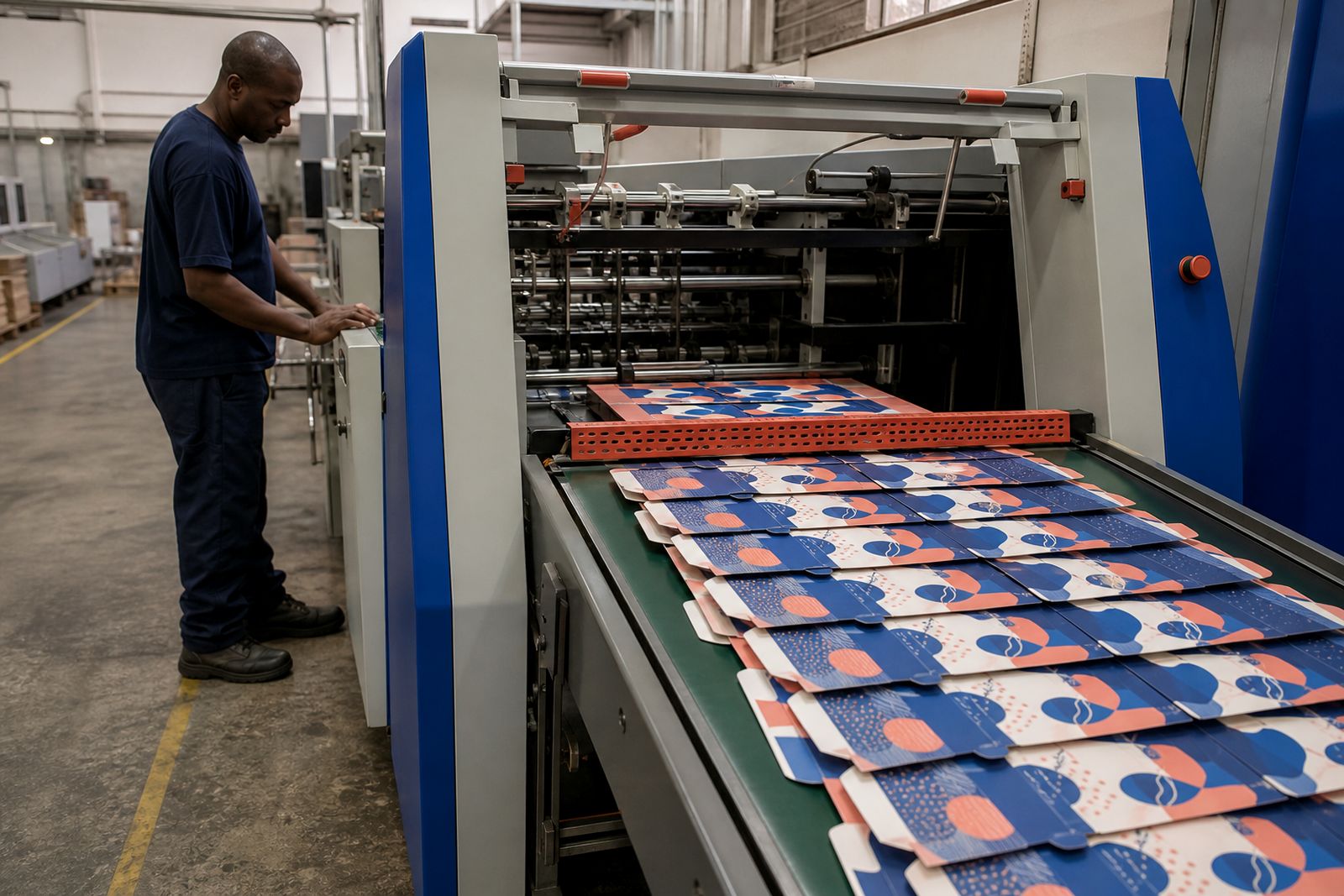
Built for retail packs that fold, fill and close neatly
Folding cartons are made from printed board that is creased, cut and glued so the pack arrives flat and is erected when your product is packed. They suit items that need a smart retail face without the bulk of corrugated transit packaging. On this work we check artwork, print the sheets, apply selected finishes, die cut, glue and pack for delivery from Pinetown to sites across KwaZulu-Natal and the rest of South Africa.
These cartons are used where presentation and accurate panel layout count, especially for packs with ingredients, directions, barcodes and batch marking areas. They work well for cartons that must stack in outers, run through hand packing lines or close with tuck flaps. If the brief needs heavy product support, wet cold-chain handling or rough freight as the main job, another pack format is usually more suitable.
- Straight-line cartons for efficient gluing and packing
- Reverse tuck and straight tuck closing styles
- Auto-lock or crash-lock bases for faster hand erection
- Window patching where product visibility is needed
- Print finishes for shelf impact and scuff resistance
Board choices, carton styles and practical size limits
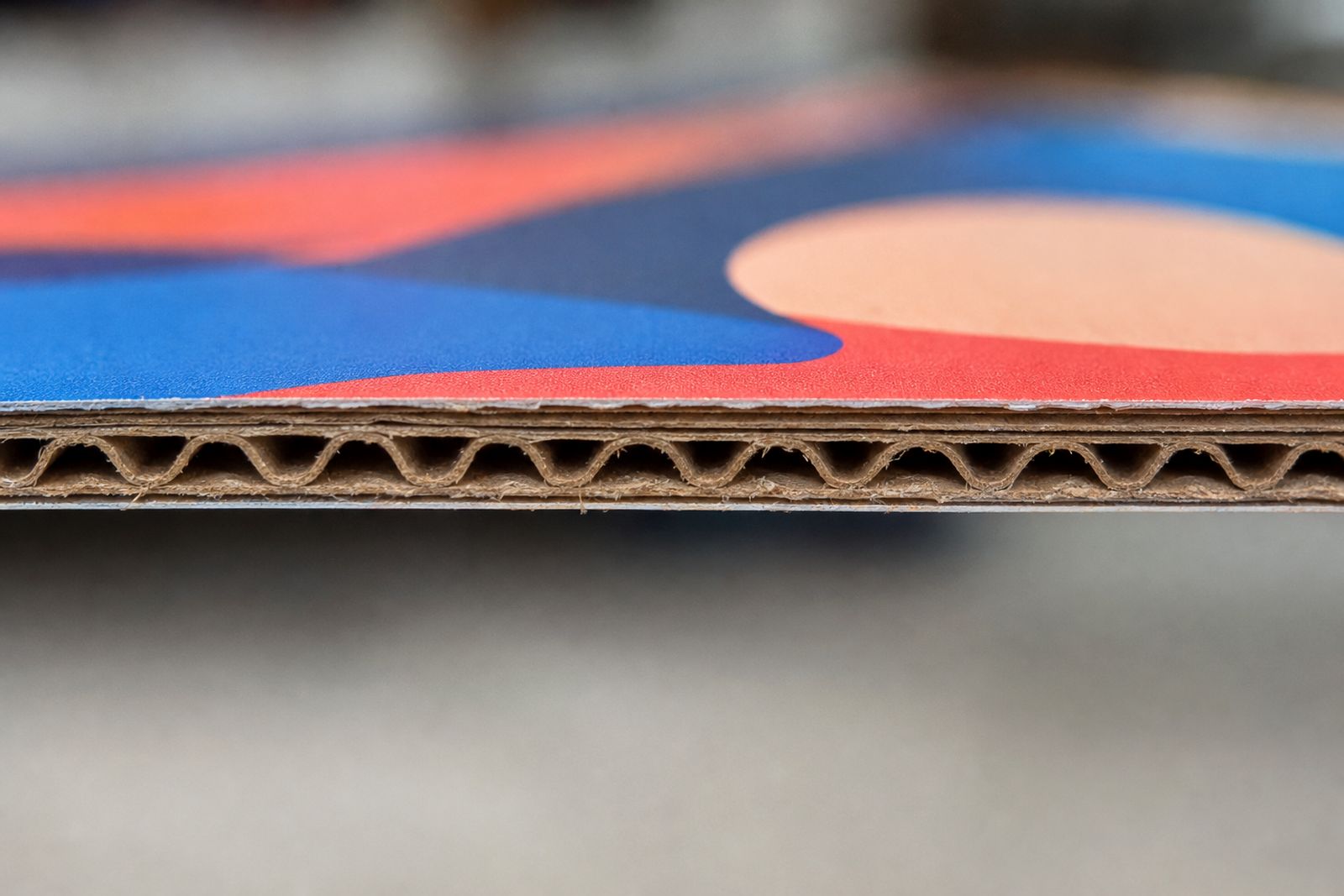
Most folding cartons are produced on cartonboard selected around product mass, panel size and the finish required. Lighter packs such as cosmetics, sachet outers and small accessory packs usually run on lighter board grades, while wider or taller cartons often need a stiffer caliper to keep panels square. We also look at how the carton will be packed, because a narrow pack with a tall wall can bow if the board choice is too light.
Typical work includes compact retail cartons, counter display outers and sleeves. Very small cartons can be produced, but tiny locking tabs and narrow glue flaps place limits on clean conversion. At the other end, very large cartons may lose stiffness or become awkward on filling lines, so a litho-laminated box may be the better route there. Artwork with dense solids across crease lines also needs care because heavy ink coverage can mark if the construction is too tight.
- Board selection matched to carton dimensions and product weight
- Glue flaps sized for secure closing without wasting panel space
- Crease rules set to reduce cracking on darker printed areas
- Finish choice balanced against scuffing, rub and barcode reading
- Window, hanger and perforation options where the brief calls for them
Where folding cartons earn their keep
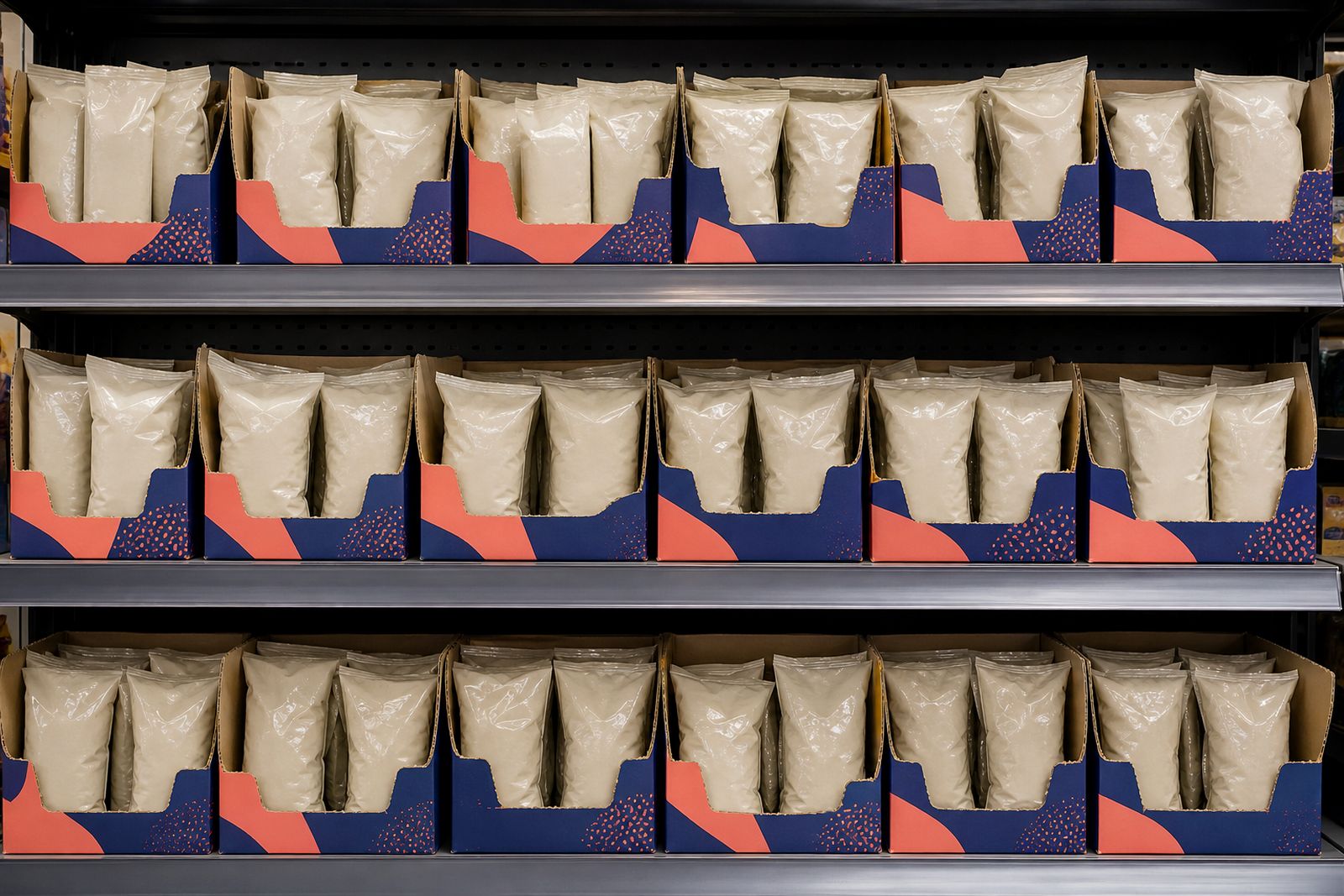
For cosmetics and personal care, folding cartons suit creams, soaps, serums, masks and boxed gift sets where print quality and fine text are important. In food work they are common for dry goods, tea, confectionery and other products that use an inner wrap, sachet or food-safe primary pack. For small electronics they are useful for cables, chargers, adaptors and accessories that need shelf presence plus room for warnings and specifications.
There are also jobs where folding cartons are the wrong fit. They are not intended for loose liquid containment, chilled moisture exposure without protection, or heavy items that put too much load on the base and side seams. They are also not a substitute for plastic packaging, and we do not make plastic packs. If a product is bulky, sharp-edged or shipped long distances in mixed freight without proper outers, the carton can mark or collapse before it reaches the shelf.
Filling line, storage and site conditions that matter
Because folding cartons are supplied flat, they need a clean dry storage area before use. Coastal humidity in Durban and along the KwaZulu-Natal coast can soften board slightly if cartons are left open to damp air, which affects squareness and closing feel. Keep wrapped bundles off concrete floors and away from direct sun, steam and warehouse roller doors where moisture moves in and out through the day.
On site, the main requirement is that the chosen carton style suits your packing method. Hand packing can work with more intricate closures, while faster lines usually benefit from simpler tuck arrangements and well planned glue seams. If the packed product sheds powder, oil or fine dust onto closure flaps the pack may not close as intended, so it helps to raise this early. Cartons should be tested on your own line or packing bench before a full run, even when the structure looks familiar.
- Store flat in dry indoor conditions
- Keep cartons wrapped until needed for packing
- Avoid high humidity swings and direct heat
- Check erection, product fit and closure during a packing trial
- Use transit outers suited to stacking and distribution loads
Print finish, handling and day-to-day care
The appearance of a folding carton depends on both the board and the finish. Gloss coatings, matt effects, spot UV, foil blocking and embossing can all change how the pack handles in production and on shelf. A very high gloss face may show scuffs more easily during filling, while a softer matt look can mark if cartons are rubbed together in transport. We help match the finish to the job rather than treating every retail pack the same.
After delivery, care is mostly about handling. Do not over-compress bundles under heavier stock, and avoid dragging flat packs across rough surfaces because corners pick up damage quickly. If cartons will be batch coded on site, mention the coding method early so the print surface can be checked for ink or thermal transfer performance. It sounds like a small point but it can save a lot of spoilage later.
Details that help us quote and plan the carton properly
When you send an enquiry, include the packed product dimensions, approximate product weight, packing method and the environment the carton will face in storage and distribution. It also helps to know whether the item sits upright, hangs on a peg, or needs tamper evidence. If you already have a cutter guide or existing carton sample we can work from that, otherwise we can review the pack intent from your supplied measurements and artwork.
Please tell us which province the cartons must be delivered to, whether they are for a launch or an ongoing line, and what finish level you need. If the job includes food contact barriers inside another pack, barcode panels, variable coding spaces or export distribution, say so upfront. Send your files and project notes through our contact form so the brief reaches the right team with the technical detail intact.
- Product dimensions in millimetres: length, width and depth
- Approximate filled weight of each pack
- Carton style, if already known
- Board preference or sample reference
- Finish requirements such as varnish, foil or embossing
- Distribution conditions and delivery province
What our Packaging customers say
Verified Google reviews
Questions we get asked
Can folding cartons carry heavy products?
They are best for lighter retail items. If the product mass is high, or the contents have sharp edges, we may suggest a different structure or a stronger outer pack for distribution.
Do you print food packaging?
Yes, for cartons used around food products where the food itself is usually inside a primary wrap, sachet or liner. Tell us about the product and packing arrangement so the board and finish can be checked for the application.
Can you help if we already have artwork?
Yes. We can review supplied artwork, check it against the cutter layout and produce proofs before the main run. We do not develop brand identities, but we do work through print setup details carefully.
Tell us about the job
Send sizes, materials and where you are through our contact form, and we will come back with the practical options.
Open the contact form