

Shelf ready and display boxes
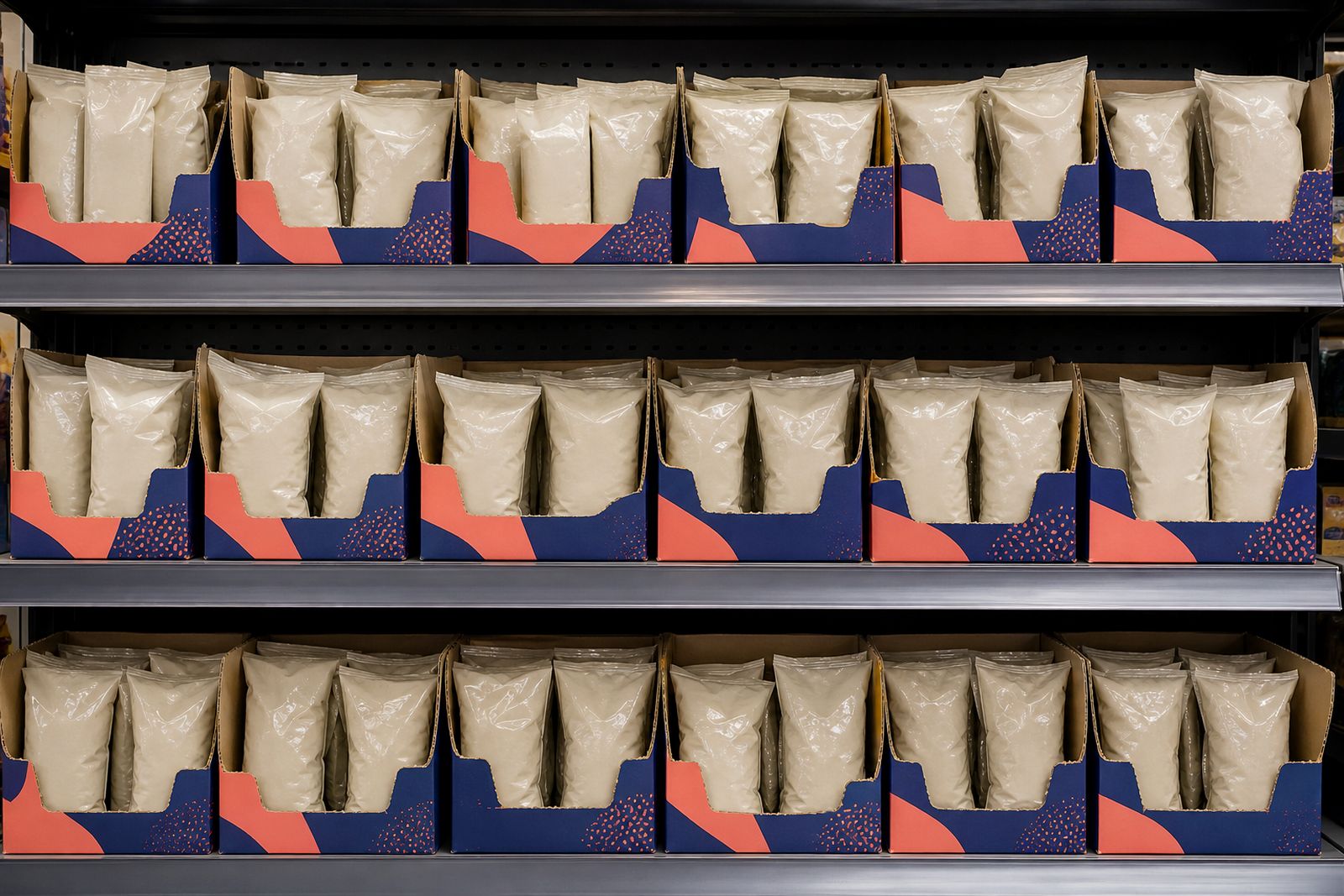
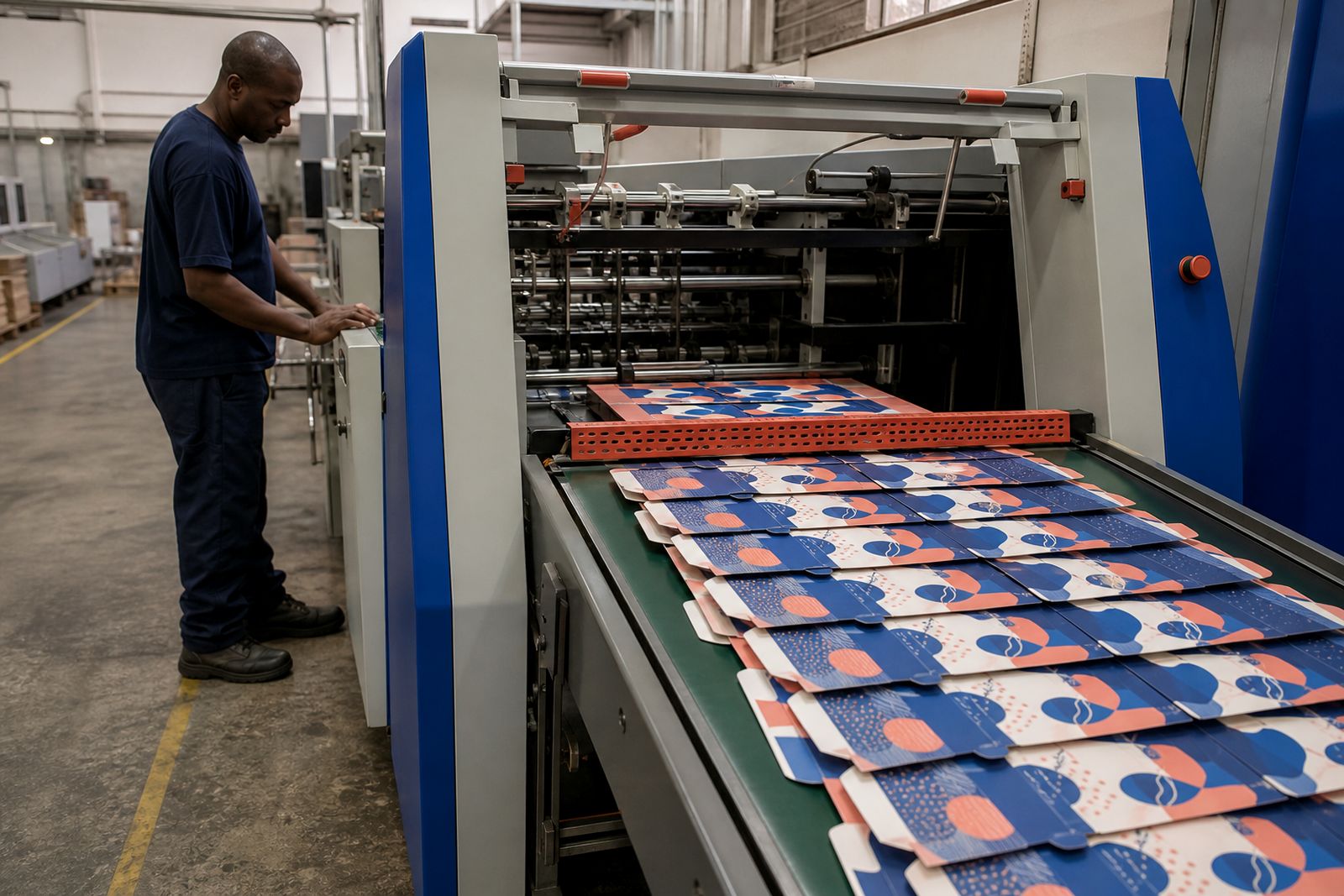
Shelf ready and display boxes are made to move from packed transit to retail presentation with less handling on site. We print tear-off front cartons, counter units and shelf display outers that hold shape well and carry clean litho-laminated graphics.
Built for shelf placement, not just transport
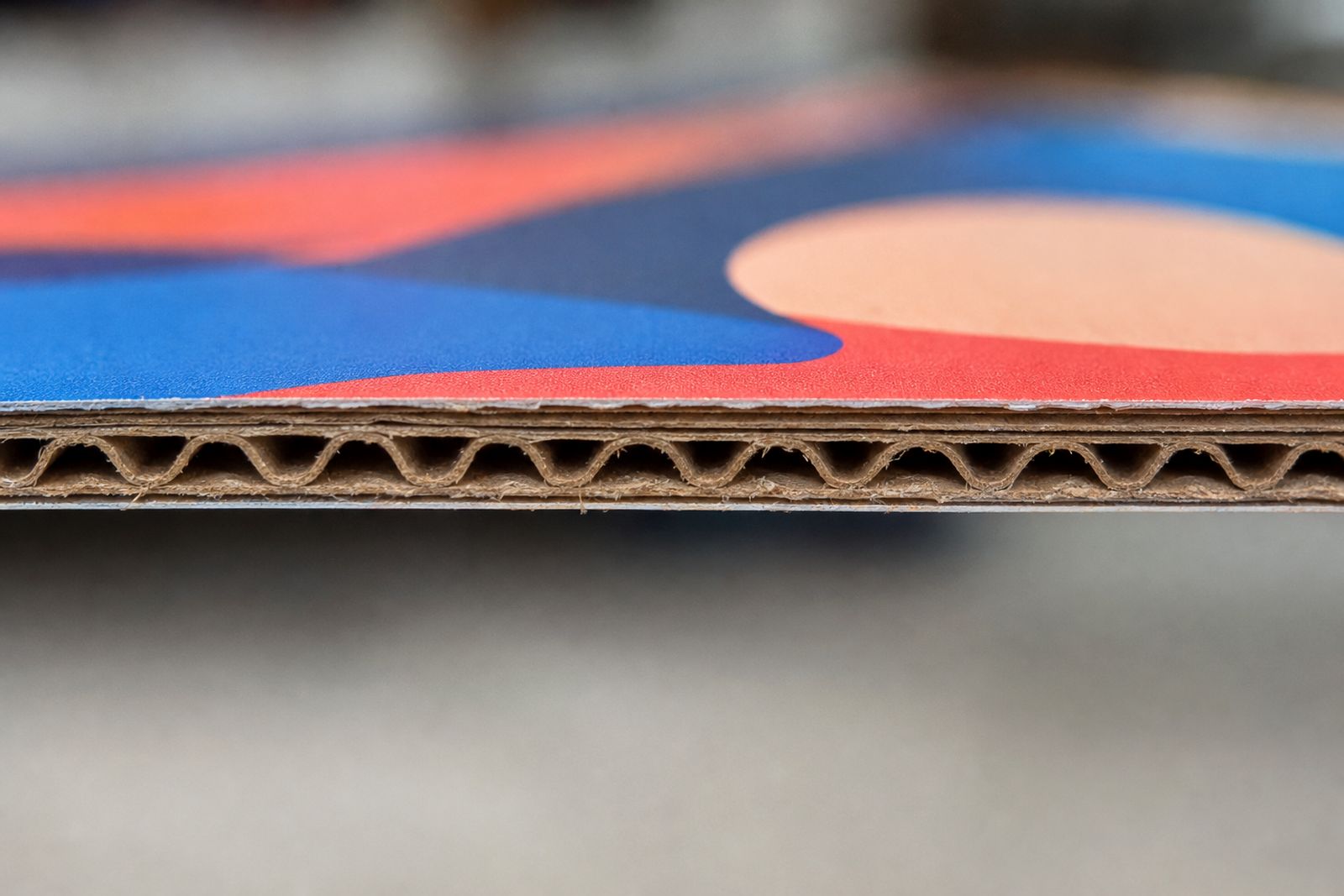
A shelf ready box starts as a transit carton but is planned so the outer can open cleanly and present product on shelf without a full unpack and re-pack. That can mean a tear-off front, a perforated top section, a tray with a fitted lid, or a counter display format that lands straight at till points and promo tables. The print sits on a litho sheet laminated to the chosen corrugated board, giving better colour control and sharper small text than direct print onto rough board.
These boxes suit retail lines where neat presentation matters as much as protection. They are widely used for food and beverage packs, personal care cartons, refill packs, sachet bundles, small appliance accessories and other packed goods that must read clearly under store lighting. Where the product is heavy, oily or oddly shaped, the box needs closer structural planning or a different pack style may be the better route.
Common formats and the limits that matter
We produce display outers in a range of footprints, from compact counter units to deeper shelf trays carrying multiple inner packs. Final size depends on the item count, the weight per packed unit, the flute profile and how the front opens. A box that tears away too low can lose rigidity, while one that opens too high can hide the product line behind board.
- Tear-off front shelf cartons for direct placement in aisles and convenience shelves.
- Counter display boxes for small units sold near pay points or service counters.
- Tray and lid formats where the lid removes completely and the tray remains on display.
- Perforated display outers with opening guides for store staff.
- Display shippers for promotions where transport and shelf presentation happen in one pack.
Working limits usually come from load and handling, not only from print area. Very tall narrow boxes can rack during transport. Deep packs with a low tear line may bow at the front once opened. Humid coastal conditions around Durban can also affect board stiffness if the wrong grade is chosen, so board and flute selection needs to match storage and distribution conditions.
Board choice, print finish and opening style
Most shelf ready work is made on corrugated board with a printed litho label laminated to the face. The flute gives stacking strength, while the top sheet carries branding, product names, legal copy and barcodes cleanly. For lighter contents, a finer flute gives a neater edge and better retail appearance. For bulkier or heavier packed items, a stronger flute may be needed even if the box looks slightly more industrial.
- Fine flute options for better print appearance and tighter folds.
- Stronger flute options for added compression strength in transit.
- Matt or gloss varnish where scuff resistance and shelf presentation both matter.
- Spot coating or foil details for selected premium ranges.
- Perforation patterns matched to the opening action required in store.
Opening style is not a small detail. Store staff must be able to remove the front panel neatly without tearing into the branding or cutting through product information. We check the line of perforation, thumb notches, finger lifts and glue positions so the carton opens in the right sequence. On some jobs a small trial sample saves a lot of trouble later, espescially where the retailer has strict shelf rules.
Where these boxes work well and where they do not
Shelf ready and display boxes work well when products are sold in volume, stocked by store staff under time pressure, or presented in rows where visibility drives off-take. They also help where shelf facings must stay tidy through the trading day. For promotions, a printed shipper can carry stock to branch level and then act as the display unit, reducing extra handling at the branch.
They are less suitable where the product is too heavy for a tear-away front, where tamper evidence must remain fully intact until the point of sale, or where moisture exposure is constant. They are also not the right answer for plastic packaging requirements, vacuum formed inserts or packs needing a rigid presentation box with hinged hardware. In those cases we can still assess the printed carton component, but not the plastic pack itself.
Packing line and store-floor practicalities
These cartons need to suit both the packing line and the store shelf. If your product is case packed by hand, we look at easy loading, glue flap position and whether the filled carton can be taped or closed cleanly without crushing corners. If it runs on automated or semi-automated lines, we need the erected box style, packing direction and any limits around glue seam placement.
At store level, the important points are shelf depth, shelf height, barcode visibility and how the front panel is removed. Some retailers want opening instructions printed discreetly on the side or top. Others need the transit code and retail code separated clearly. If cartons will be stacked in a back room before issue, compression strength and moisture exposure need to be discussed early.
- Shelf depth and front lip height.
- Pack count per display unit.
- Outer dimensions for pallet planning.
- Required opening method in store.
- Any retailer-specific marking or shelf rules.
Handling, storage and what to send with your enquiry
Store flat cartons in a dry indoor area away from direct damp and floor moisture. In coastal KZN, cartons left in humid receiving bays can soften before filling, which affects squareness and opening performance. Filled display units should be stacked to the agreed load limit and not mixed with heavier cases on top. Clean opening edges also depend on proper perforation use, not rough knife cuts through the front panel.
When you send an enquiry through our contact form, include the packed product size, unit weight, quantity per display box and whether the carton must travel as a transit outer before going on shelf. A rough sketch, plain mock-up, cutter guide or current sample helps a lot. If there are mandatory barcode positions, ingredient panels, warnings or retail planogram requirements, send those at the start so the structure and artwork checks line up properly.
- Product dimensions in millimetres.
- Weight of each sales unit and total packed box weight.
- How many units the display box must hold.
- Preferred board or current pack sample if you have one.
- Photos of the present pack on shelf, if available.
- Delivery town, branch split or provincial distribution notes.
What our Packaging customers say
Verified Google reviews
Questions we get asked
Can shelf ready boxes also work as transit cartons?
Yes. Many jobs are planned so the carton protects goods in delivery and then opens into a presentable shelf unit at branch level. The board grade and opening line must be matched to that dual use.
Do you help with artwork checks for display boxes?
Yes. We check supplied artwork against the cutter and opening style so key text, barcodes and branding do not fall into folds, glue areas or tear lines. We do not create brand identities or plastic packaging.
Are counter display boxes only for small lightweight items?
They are most common for smaller units, but the right format depends on the packed weight, box width and how customers remove stock. Heavier contents may need a stronger board combination or a different display structure.
Tell us about the job
Send sizes, materials and where you are through our contact form, and we will come back with the practical options.
Open the contact form