

Spot UV and varnish
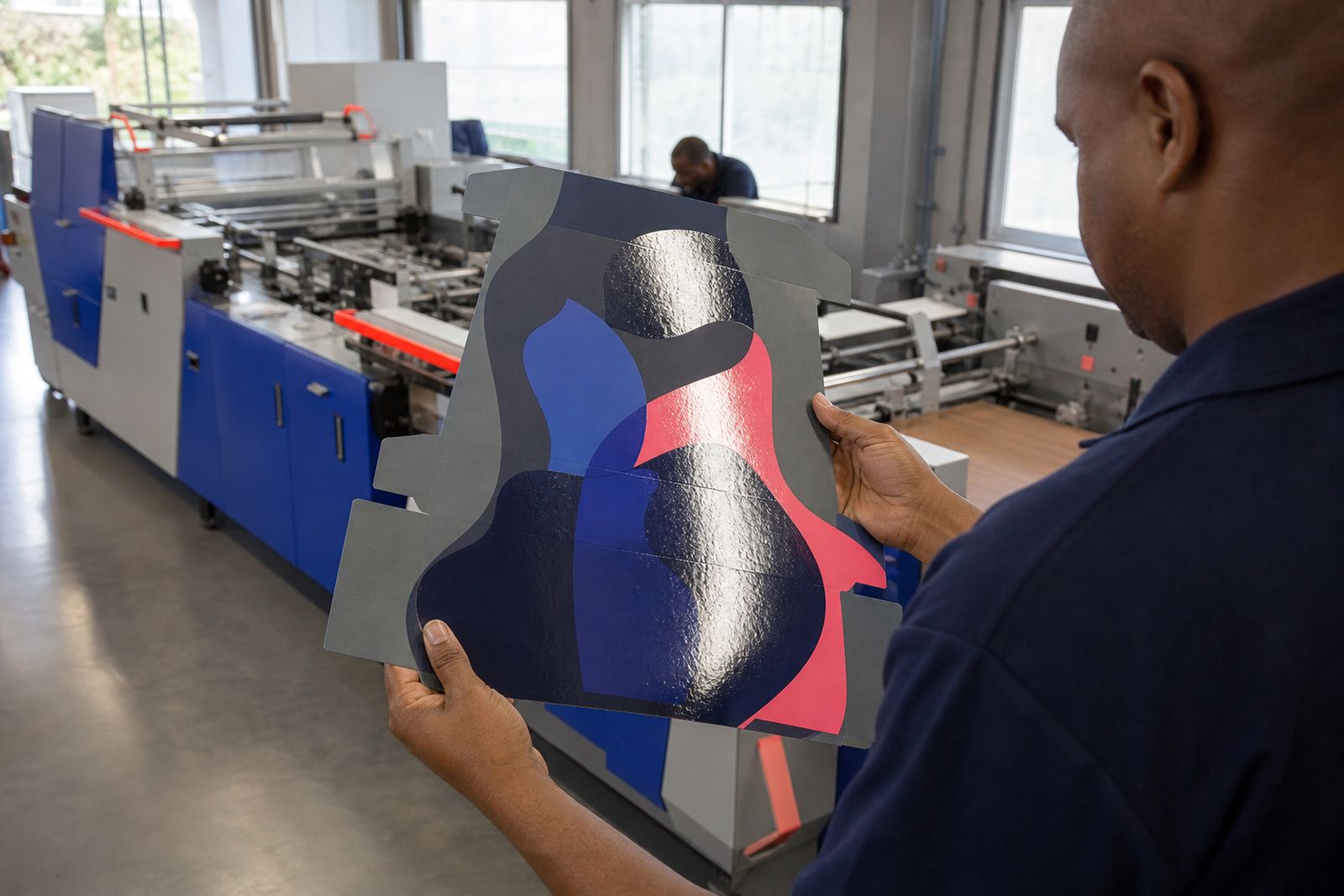
Spot UV and varnish change how a carton catches light, resists scuffing and feels in hand. We apply these finishes to litho-laminated cartons, folding cartons and display boxes where surface protection or shelf contrast matters.
Where spot UV and varnish make a visible difference
Both finishes sit near the end of production, after the printed sheet has reached its final colour standard. A full varnish coats a broader area to protect ink and control the overall surface appearance, while spot UV is placed only where a stronger gloss highlight is wanted. On shelf this can sharpen a logo, pick up a product image or make dark solids look cleaner under retail lighting.
For cartons moving through distribution, handling and pack-out lines, a coating also helps reduce marking. That matters on cosmetics, beverage outers, appliance accessories and promo packs where the carton must still look right after transport. In Durban humidity, the final surface choice can also affect how the pack shows fingerprints and rub, so the finish is not only cosmetic.
- Gloss varnish gives an even shine across a panel or the full carton.
- Matt varnish softens glare and gives text-heavy layouts better readability.
- Spot UV adds high-gloss contrast on selected objects only.
- Protective coatings help printed areas resist scuffing during packing and delivery.
What happens on press and on the coating unit
Standard varnish is applied as part of the print run or on a dedicated coating pass, depending on the board, coverage and finish required. The coating is metered through the unit at a controlled film weight, then dried or cured before the sheet moves to the next stage. Spot UV needs its own mask or plate so only selected artwork areas receive the gloss layer.
Registration is critical. If a gloss shape drifts even slightly off the printed image, the result looks untidy straight away, especially around small type, fine borders and tight logo edges. We check the relationship between artwork, coating area and die line before plates are made because moving the coating later can affect the whole carton face. On folded work we also check where creases, glue flaps and lock points fall, becuase a beautiful gloss patch means little if it lands across a working fold.
When the extra finish earns its place
Not every carton needs a special surface treatment. A simple transit carton usually does not benefit from spot UV, and some retail packs read better with a quiet matt finish only. The extra process is worth paying for when the carton has to carry visual contrast, survive more handling or support a premium position in a crowded fixture.
- Use spot UV when you want a logo, pattern or hero image to catch light separately from the background.
- Choose matt varnish where the artwork relies on calm solid areas and reduced glare.
- Add protective coating on cartons likely to scuff during warehousing and transport.
- Consider a mixed effect when the design needs both tactile restraint and bright highlights.
For shelf ready boxes and display units, coatings can also help outer faces hold up through opening, loading and replenishment. The gain is less about decoration alone and more about keeping the printed message presentable through the retail cycle.
Board, ink and glue compatibility
Finishes must match the base material. Coated boards generally give the crispest gloss result, while more absorbent stocks can reduce the sharpness of the highlight. On litho-laminated work, the printed top sheet and flute combination influence flatness, and that affects how evenly the coating lays down. We look at the chosen board before sign-off rather than treating finish as a last-minute add-on.
Glue areas need care. Heavy coating in a glued seam can interfere with adhesion, so those zones are usually held back or specified clearly on the artwork. The same applies to barcodes, expiry coding areas and sections that will take overprinting later in the packing line.
- Spot UV sits best on stable, well-registered printed sheets.
- Matt and gloss varnishes can be used on folding cartons and litho-laminated cartons.
- Crease lines and folds should be reviewed before placing high-build gloss effects.
- Variable print areas for coding should remain suitable for the packing process.
Fitting the finish to the artwork file
The coating layout is built from a separate layer in the artwork so the machine receives a clear instruction for where the finish must and must not go. Tiny reverse-out details, thin keylines and coatings that run hard up to a cut edge can all cause avoidable problems. We prefer to check these details before proof approval because a coating mask cannot fix weak artwork structure.
Good files show the coating area as a distinct element, aligned to the approved carton drawing. Where the job includes embossing or foil work on another pass, the order of processes must be planned properly so one effect does not spoil the other. A neat result depends on that coordination, not only on the coating itself.
Mistakes that cause disappointing results
Most finish complaints trace back to unrealistic artwork expectations or poor placement, not the coating material on its own. Spot UV over small text often fills in detail. Large dark solids with a high gloss patch can reveal every handling mark under harsh retail lighting. And a full gloss on the wrong product can make the pack look slippery rather than refined.
Another common error is asking for heavy contrast on a substrate that will not hold it cleanly. If the board texture is too open, the gloss effect may look less crisp than the sample suggested. It helps to review a physical proof or sample set before final production, particularly for personal care packs and electronics cartons where surface finish carries a lot of the shelf message. If you need us to look at a coating layer or compatibility with board choice, send the layout through the enquiry form on our contact page.
What our Packaging customers say
Verified Google reviews
Questions we get asked
Can spot UV be used on the whole carton?
It can, but a full high-gloss effect is usually better handled as an overall coating choice. Spot UV is normally kept for selected panels, logos or image areas where contrast is the point.
Does varnish stop cartons from scuffing completely?
No coating makes a carton damage-proof. Varnish helps protect the printed surface and can reduce rub marks, but board choice, handling and packing conditions still matter.
Can spot UV sit over creases and folds?
Sometimes yes, but it needs checking. High-gloss areas crossing active fold lines may crack, lose neatness or interfere with the visual effect once the carton is made up.
Also worth a look
Tell us about the job
Send sizes, materials and where you are through our contact form, and we will come back with the practical options.
Open the contact form