

Foil blocking and embossing
Foil blocking and embossing add light, texture and a more deliberate finish to printed cartons. Used properly, they sharpen shelf presence without hiding the practical needs of packing, stacking and delivery.
What these finishes do on press
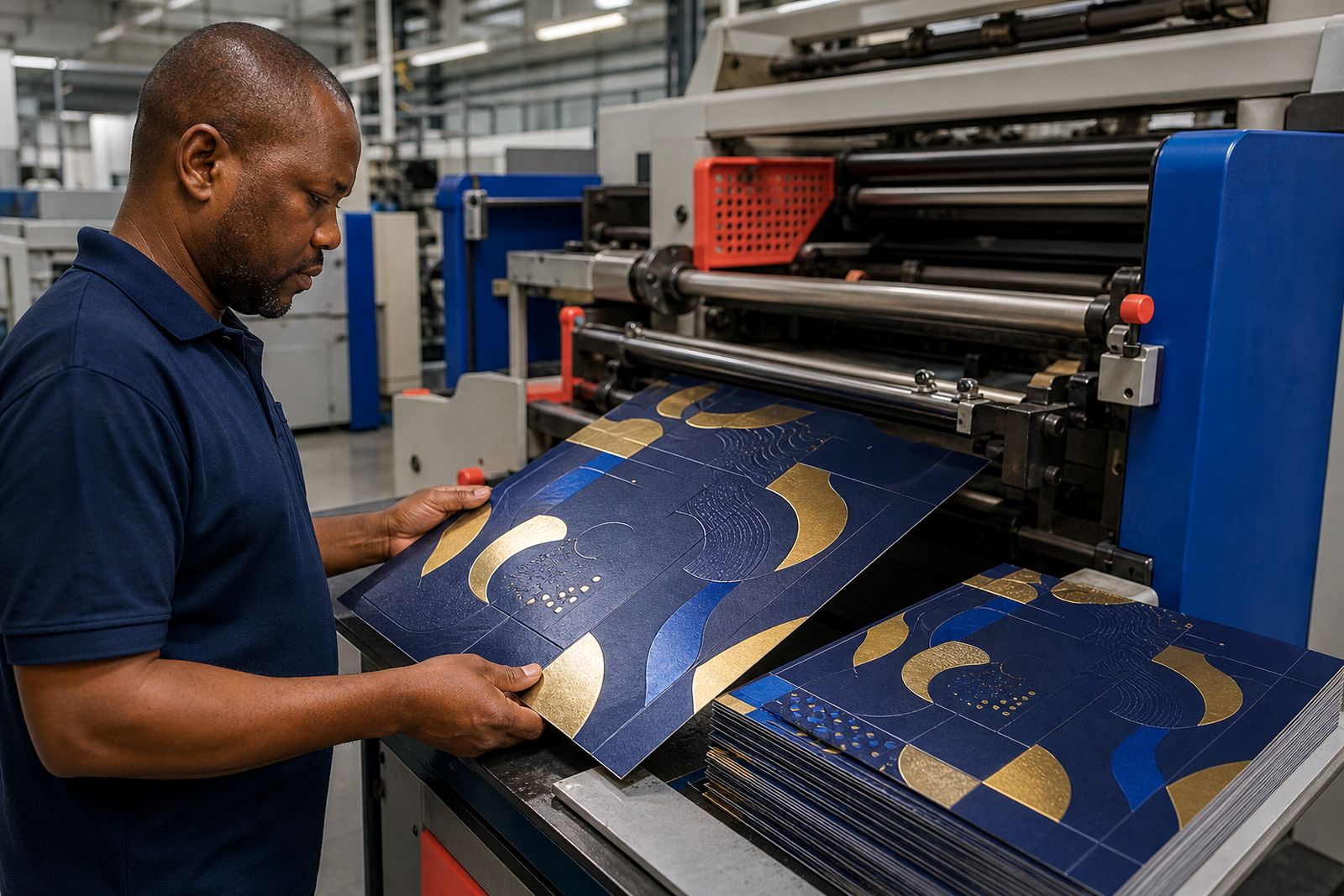
Foil blocking transfers a thin metallic or pigmented layer onto the carton surface by heat and pressure through a made die. Embossing pushes selected areas upward or downward to create a raised or recessed detail that can be seen and felt. On cartons this is usually applied after printing, once the sheet and coating choice have been checked against the die artwork.
The effect is most useful where the pack needs a clean focal point rather than more ink coverage. A logo, product name, border line or small icon can catch light well, while embossing gives shape to plain board areas that would otherwise read flat on shelf.
- Foil adds reflectivity, contrast and crisp edge definition.
- Embossing adds height, shadow and tactile interest.
- Both can be used together on the same panel when artwork allows proper spacing.
Where foil and embossing earn their keep
These options are worth paying for when the carton has to work harder at arm's length and at hand level. Cosmetics, gift packs, drinks presentation cartons, promotional sleeves and selected electronics packs often benefit because the finish gives a clearer visual cue than another printed tint would. It can also help when a range needs one common pack structure but separate visual hierarchy across variants.
Not every job needs it. If the carton is strictly transit minded, heavily scuff-prone, or packed in a way that hides the front panel immediately, foil and embossing may add cost without adding enough value. We usually look at the shelf role first, then the board surface, then whether the detail will survive filling and outer packing.
- Best for front-facing retail panels and gift presentation.
- Useful where a dark print design needs a bright accent.
- Less useful on packs that are over-labelled or tightly overwrapped.
How the tooling is fitted and set
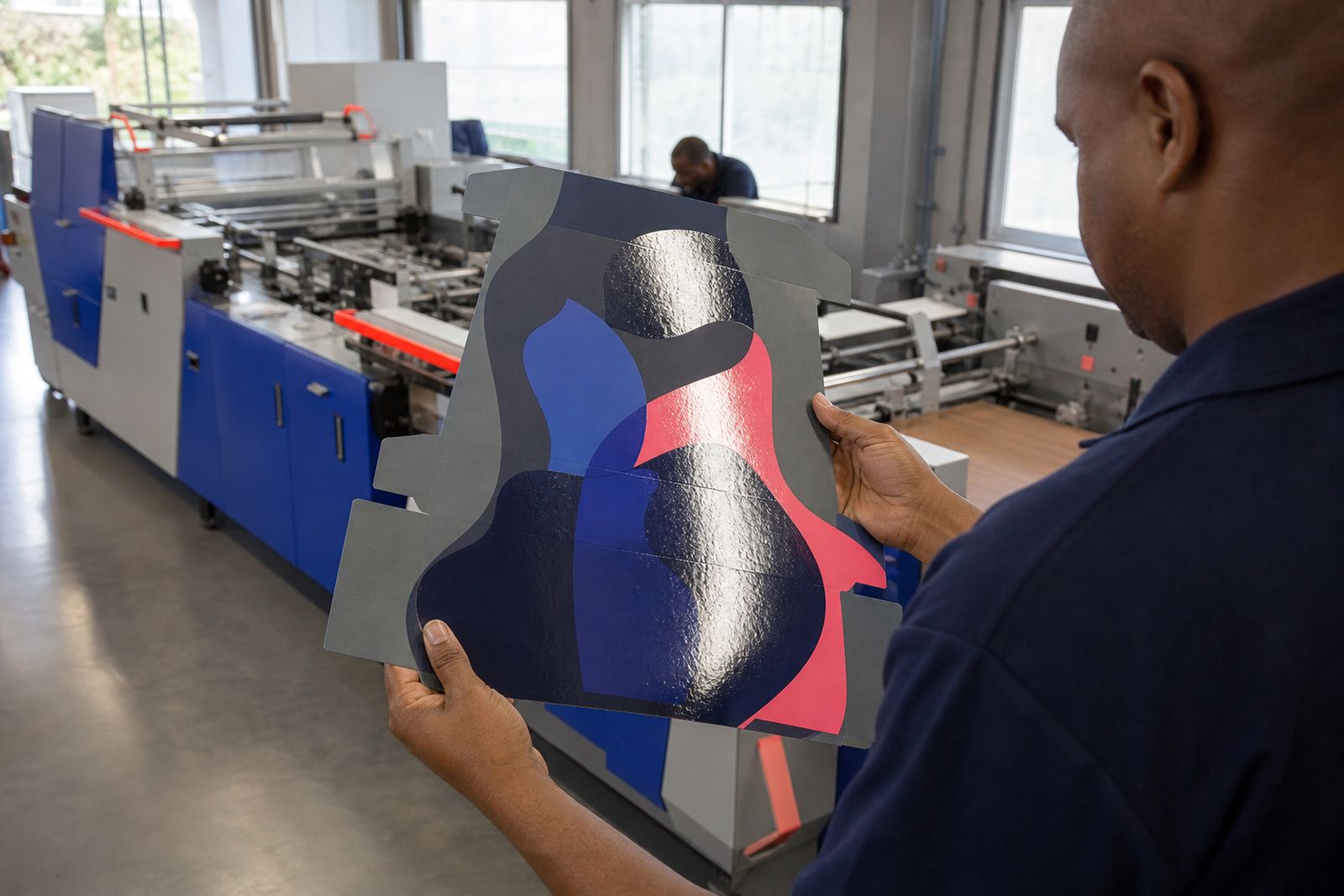
Each foil or emboss area needs dedicated tooling prepared from approved artwork. The die is mounted in register with the printed sheet, then heat, dwell and impression pressure are adjusted to suit the board, coating and chosen foil. For embossing, the make-ready includes matching the male and female components so the height forms cleanly without cracking the fibres.
Set-up matters more than people think. Fine rules, small text and tight corners can look sharp in artwork yet fail on board if the die depth is wrong or the grain direction is ignored. We check trapping, panel breaks and fold lines before production so the finish sits where it should and does not land across a structural weakness.
On humid KwaZulu-Natal days board can move slightly between processes, so register tolerance has to be watched carefully during make-ready and through the run.
Board, coating and artwork compatibility
Foil and embossing do not suit every carton specification in the same way. Smooth coated boards generally show finer detail and cleaner foil edges than rougher uncoated stocks. Litho-laminated work can carry the finish well, but flute profile, top sheet thickness and adhesive lay all affect how much pressure the face can take before distortion starts to show.
- Larger solid foil areas need stable board and careful pressure balance.
- Very small reversed-out details can fill in if the die is too fine.
- Heavy varnish under a foil area can interfere with adhesion.
- Embossing too close to a crease line may weaken carton folding.
Artwork for these finishes should be supplied as separate spot layers with clear naming. If a foil area must register to printed type or image, the alignment allowance should be realistic for carton production rather than treated like a screen-only graphic.
Common mistakes that spoil the result
The most common error is trying to make foil do the work of the whole design. Too many highlighted areas compete with each other and the pack loses structure. Another regular problem is placing an embossed badge across a panel that will bow inward once the carton is filled, which flattens the detail and can leave pressure marks on the reverse.
We also see artwork where metallic effects have been simulated on screen and then treated as if foil can follow every gradient. Foil is a physical stamp, not a printed blend. It looks best when the shapes are decisive and the surrounding print leaves enough quiet space.
- Do not run foil across fold points unless the carton structure has been checked.
- Do not expect rough board to hold extremely fine edges cleanly.
- Do not stack several special finishes in one small area without a test sheet.
Using proofs and samples before full production
For cartons where finish quality carries brand value, a proof path is usually worth the extra handling. A plain print proof can confirm layout and colour position, but a production sample or strike-off is the better check for foil brightness, emboss height and the way the board recovers after pressure. That is especially true for display boxes and front panels where angled light changes the look.
Samples also help packing teams judge whether the raised area will scuff in transit, whether the foil sits too near glue flaps, and whether barcode zones remain clear. A small adjustment at this stage can save a full run from looking overworked or underdone, and it keeps the finish tied to the actual carton job rather than a screen mock-up.
What our Packaging customers say
Verified Google reviews
Questions we get asked
Can foil blocking be used on folding cartons and litho-laminated boxes?
Yes. It is commonly used on folding cartons and on litho-laminated work, provided the board surface and structure can take the required heat and pressure without marking or distortion.
Does embossing always need foil with it?
No. Blind embossing uses shape and shadow only, with no metallic layer. It suits cartons that need texture without extra reflectivity.
Will these finishes affect barcodes or packing lines?
They can if placed badly. Barcode panels, glue areas, crease lines and tight machine handling zones should stay clear unless the carton specification has been checked for that exact placement.
Also worth a look
Tell us about the job
Send sizes, materials and where you are through our contact form, and we will come back with the practical options.
Open the contact form