

Samples and proofs
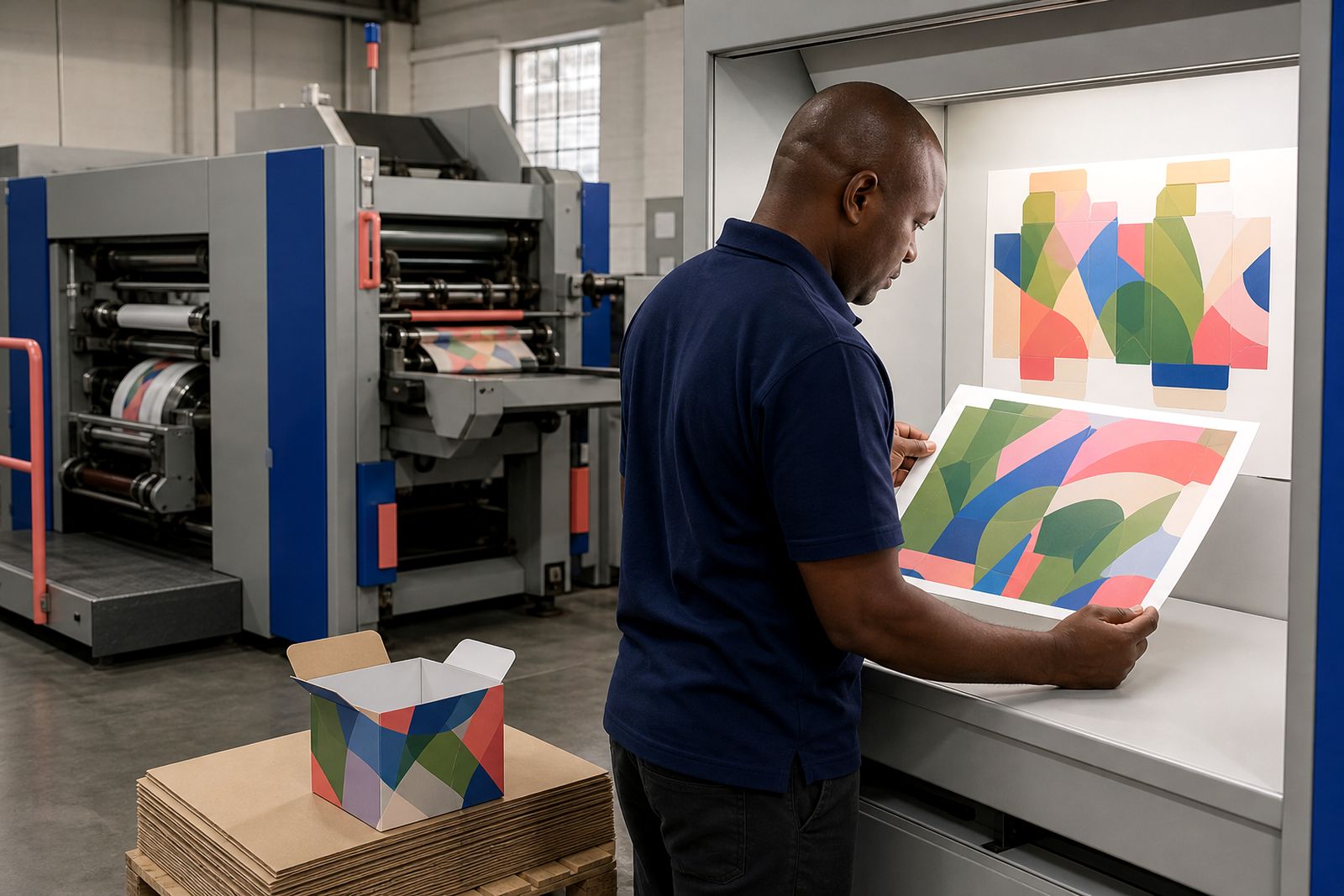
Before a carton run moves onto press, we check fit, print appearance and pack construction with the right proofing stage. Lithography Printing prepares white samples, digital proofs and press proofs for carton work headed to production in Pinetown and delivery across South Africa.
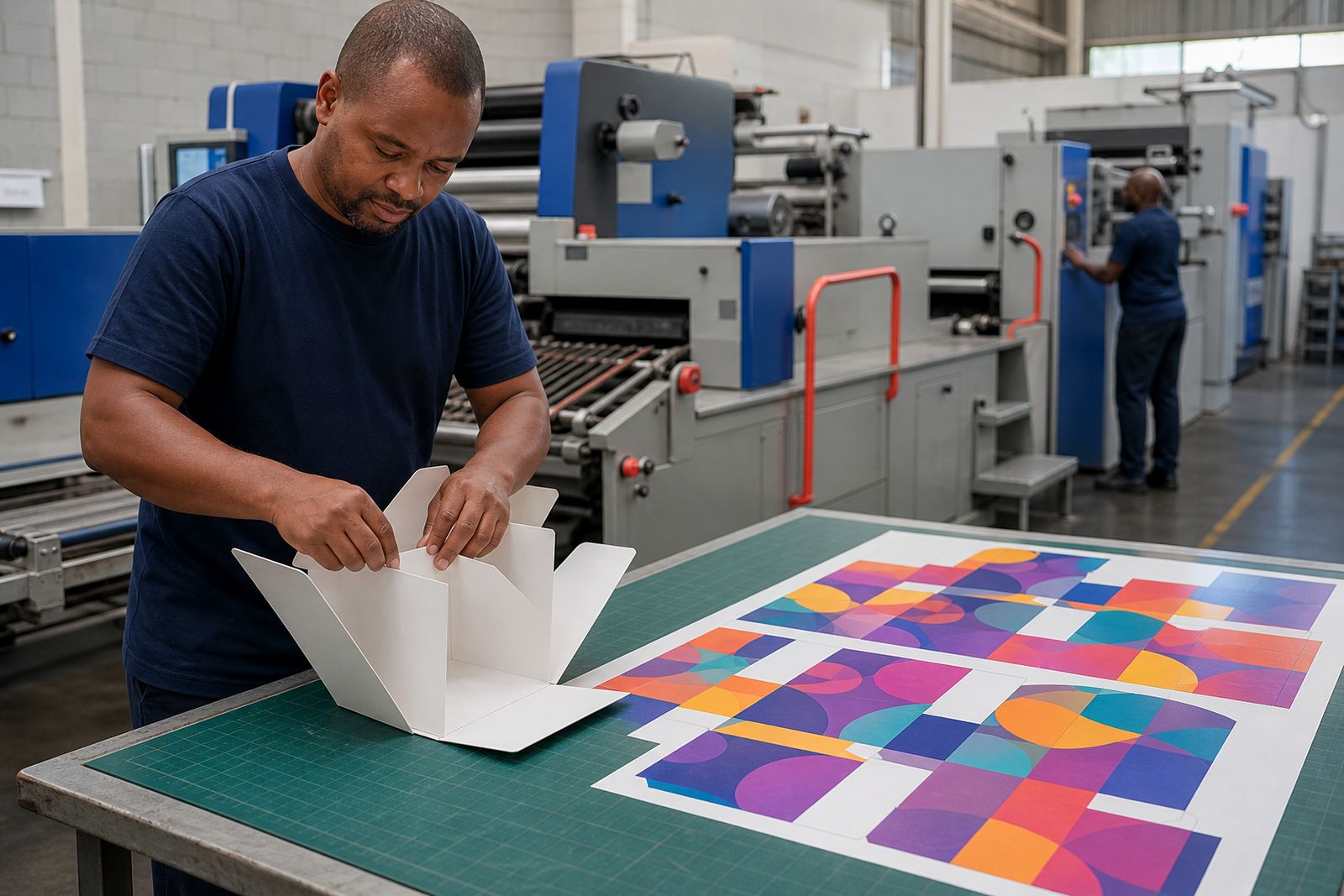
Proofing that matches the carton job
Samples and proofs are there to remove guesswork before the full print run starts. On litho-laminated cartons, folding cartons and display boxes, small differences in panel size, fold direction, colour build or varnish placement can affect filling lines, shelf appearance and final packing performance.
We offer three main stages, used on their own or in sequence depending on the job. A white sample is mainly for structure. A digital proof is mainly for printed appearance. A press proof is used where a closer reading of the live print result is needed before the full run proceeds.
- White samples for size, folds, locking points and pack assembly.
- Digital proofs for layout, copy, image position and general colour direction.
- Press proofs for higher confidence on colour, board and finishing interaction.
- Checks linked to the final production route, including laminating, die cutting and gluing.
We do not develop brand identities or redraw a whole pack range from scratch, but we do review supplied artwork carefully before proofs are made. That early check often picks up items that look minor on screen yet matter on press.
What is included at each stage
A white sample is produced from the intended cutter guide or structural layout so your team can handle the carton before print. This is useful where there are crash lock bases, tuck ends, inner fitments, windows, shelf ready perforations or display features that need a physical check.
Digital proofs are prepared from the supplied artwork after prepress review. These show text position, barcodes, legal copy, image crop, panel sequence and the relationship between print and die line. Where a special finish is part of the job, the proof also helps confirm whether foil, embossing, spot coating or varnish sits in the correct area.
Press proofs are arranged for work that needs a more production-led sign-off. Here, the point is to inspect output under print conditions closer to the actual run. A press sheet can show a slight tonal shift, thats one reason this stage matters on sensitive colour work.
- Structural review against the cutter guide.
- Artwork preflight for resolution, bleed, fonts and colour mode.
- Proof annotation where corrections are needed before approval.
- Reference for finishing placement on approved files.
How the sequence usually runs
The process starts with your artwork files and carton brief. We check the pack style, finished size, substrate choice and any filling, stacking or retail requirements that may affect the structure. If the carton is new, a white sample is often the first useful checkpoint.
Once the structural route is agreed, prepress review takes place on the supplied artwork. At this stage we look for trim safety, image quality, barcode orientation, trapped text, panel break alignment and any elements that may move awkwardly across folds, glue flaps or perforation lines.
After internal checks, a digital proof is issued for content and layout approval. Corrections are fed back into the file, then updated proofing can follow where needed. For selected jobs, especially where colour matching carries more risk, a press proof is added before the full run continues.
Final approval then locks the production file for printing, laminating where required, die cutting and gluing. This staged route keeps the proof aligned to the actual carton build rather than treating artwork as if it lives on a flat sheet only.
What to send before proofing starts
The clearest proofing jobs happen when the file pack is complete from the start. If several SKUs share one carton family, it helps to flag what changes between variants and what remains common across the range. That avoids avoidable resets later on.
- Print ready artwork as high resolution PDF files.
- Linked visuals if image-heavy panels need cross-checking.
- Final copy for ingredients, warnings, instructions or technical text.
- Barcode files or confirmed barcode numbers.
- Pack dimensions, board preference and any flute requirement.
- Notes on special finishes, windows, tamper features or retail display use.
If your carton must suit a filling line, tray, shipping outer or retail shelf format, include that information early. A carton may look correct in isolation and still create trouble once packed into a larger transit unit. For food, cosmetics and electronics work, approval paths can involve more than one department, so a single marked-up proof set usually helps keep comments tidy.
How proofing charges are worked out
Proofing cost is tied to the amount of preparation and the type of sample required. A straightforward digital proof from finished artwork is different from a white sample that needs structural output and manual assembly, and both differ from a press proof linked to machine time, set-up material and live production conditions.
In general terms, pricing is influenced by carton size, number of versions, number of corrections, complexity of the cutter, board or flute selection and the presence of special finishes. Multi-pack ranges with repeated content changes can also add prepress handling even where the structure stays the same.
Where the proofing stage forms part of a production job, we set it out in relation to the planned carton run so there is a clear record of what is being checked and approved. For work that needs only samples or proofs before a later production decision, the scope is listed separately. Share the files and pack details through our contact form so the team can assess the route properly.
Approval records and what follows after sign-off
Once a proof is approved, it becomes the working reference for the next production stage. That does not mean every screen and light source will display colour identically, but it does create a common benchmark for layout, text, structure and finish position.
We keep approval notes tied to the job file so any later carton reprint, size change or artwork amendment starts from the last signed version rather than from memory. If a board change, flute change or major colour amendment is introduced after approval, a further proof stage may be needed before printing continues.
After sign-off, the carton job moves into the agreed manufacturing steps and then delivery. If your team needs retained samples for internal sign-off, line trials or retailer submission, mention that at the start so the proof quantity and format match the real use case.
What our Packaging customers say
Verified Google reviews
Questions we get asked
Do I need a white sample if the artwork is already approved?
If the carton is new, a white sample is still useful because artwork approval does not confirm fold behaviour, pack assembly or fit on a filling line. For repeat structures with only graphic changes, a white sample may not be necessary every time.
Is a digital proof enough for colour approval?
It is often enough for layout, copy and general colour direction, but some jobs benefit from a press proof where colour sensitivity is higher or where the board and finishing can affect the final look.
Can several carton variants be proofed together?
Yes, related SKUs can be grouped so common elements are checked once and variant panels are reviewed in sequence. This is helpful for flavour ranges, shade ranges and technical product families.
Also worth a look
Tell us about the job
Send sizes, materials and where you are through our contact form, and we will come back with the practical options.
Open the contact form